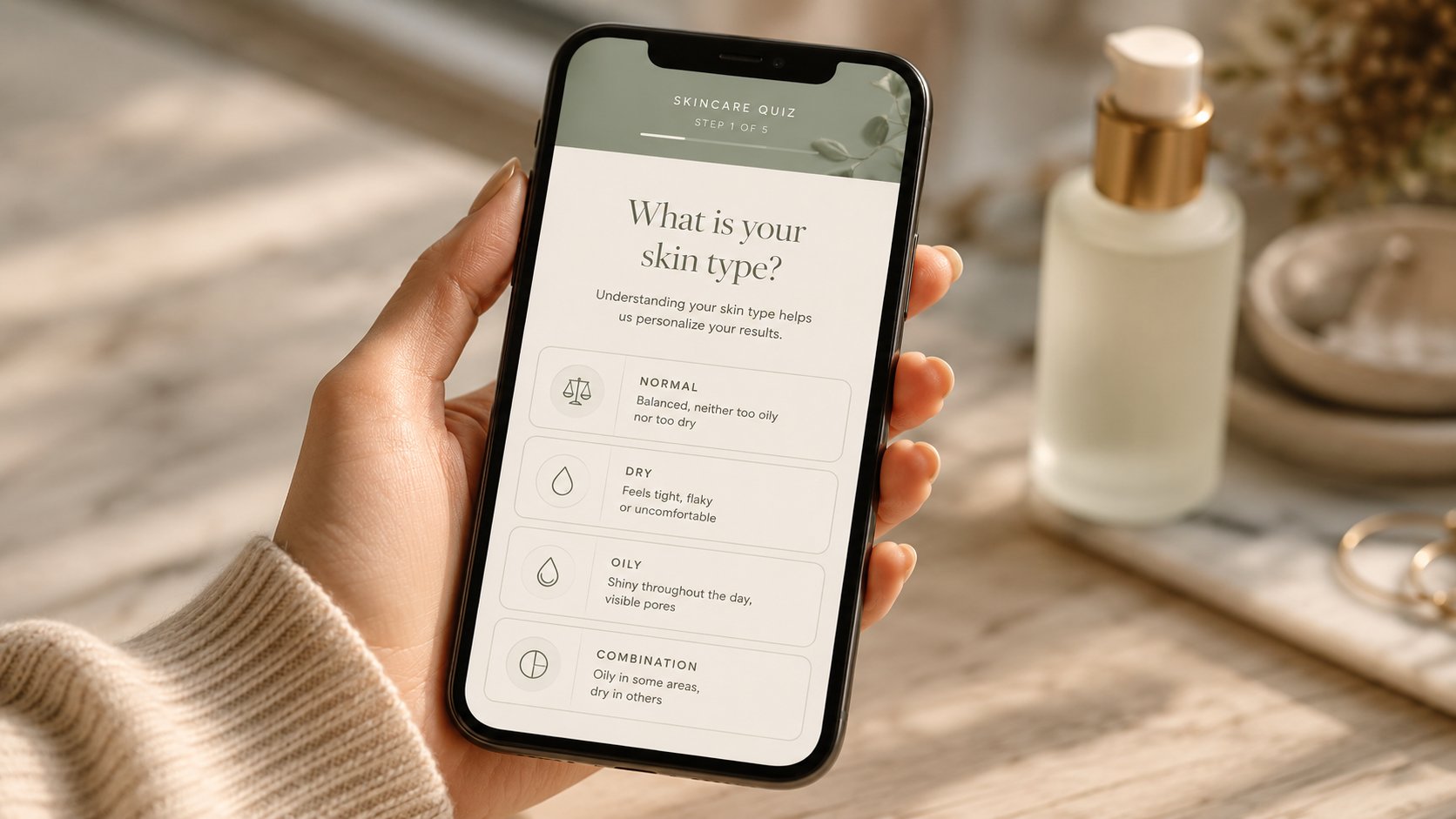
The Customer Who Knew More Than Your Algorithm Ever Could
She ran a clean beauty brand out of Pune. Three years in, and her ad creative had finally found its rhythm. Her CPCs were down, her conversion rate was healthy, and her retention flows from the last post in this series were quietly compounding revenue every week without her lifting a finger.
But there was a number she could not move. Her return rate.
Not catastrophic. Not the kind of number that shows up in a board deck with a red arrow next to it. Just a steady, grinding 14 percent on her hero serum, month after month. Customers loved the brand on social media. They wrote long, enthusiastic captions about it. And then one in seven of them sent the product back.
When she pulled the return reasons, almost all of them said the same thing in different words. “Not right for my skin type.”
I asked her how a customer chooses which serum to buy on her site. She walked me through it. A collection page. Six products, each with a clean photo and a paragraph of copy. The customer reads the descriptions, picks the one that sounds most like their situation, and adds it to cart.
I asked her: how does a customer know what their skin type actually is?
She paused. “I mean… they probably know. Or they guess.”
That guess is costing you 14 percent of every order you ship.
The data you have been throwing away
For years, the standard playbook for understanding a customer was to watch them. Pixel-based retargeting, lookalike audiences built from purchase history, algorithms that needed three or four orders before they started to get a person right. It worked because there was no alternative. You could not ask a stranger on the internet a direct question and expect an honest answer before they had even decided to trust you.
That playbook is breaking. iOS privacy changes and the slow death of third-party cookies have made behavioral signals weaker every quarter. Brands are paying more to reach fewer people with less certainty about who those people actually are.
But here is what nobody fully priced in. The same privacy shift that broke behavioral tracking also created an opening. Customers have become more comfortable, with directly telling a brand what they want, as long as the exchange feels like it is in their interest. A skincare quiz that asks about skin type and ends in a personalized routine does not feel like surveillance. It feels like a consultation.
This is zero-party data. Information the customer hands you on purpose, because answering the question gets them something better in return. And unlike a cookie, it cannot expire, get blocked, or get regulated out of existence. It sits inside your own Shopify database, owned by you, forever.
The data a customer gives you on purpose is worth more than the data you have to infer.
Why a quiz outperforms a collection page
Picture the two paths side by side.
Path one: the customer lands on a collection page showing every serum you sell. They read six product descriptions, each one trying to sound like it was written for them specifically. They pick one based on a feeling. Maybe they are right. Maybe they are not. Either way, you will not find out until the return request arrives three weeks later.
Path two: the customer answers four questions. Skin type. Primary concern. Age range. Current routine gaps. By the third question, something has already shifted. They are not browsing anymore. They are being consulted. And at the end, instead of six products to choose between, they see one. The one that matches what they just told you about themselves.
The collection page asks the customer to do the work of matching themselves to a product. The quiz does that work for them, using information only they have.
This is not a cosmetic difference. It changes what the customer is doing on your site. Browsing is a search task with an uncertain outcome. A quiz result is a recommendation from someone who appears to understand the problem. The first invites comparison shopping and second-guessing. The second invites a single decision: yes or no to the thing built for you.
Building this on Shopify without slowing your store down
Here is where most attempts at this go wrong. A founder hears “quiz” and reaches for a third-party app from the Shopify App Store. It bolts a popup or an embedded iframe onto the storefront. It works for a week. Then it starts loading slowly on mobile, your Core Web Vitals take a hit, and the very SEO gains we discussed two posts ago start eroding from a feature meant to improve conversion.
The right way to build this treats the quiz as part of your store’s data architecture, not a decoration on top of it.
As a customer answers each question, that answer should write directly to a Shopify Customer Metafield and update their customer tags in real time. The moment someone says “combination skin, primary concern pigmentation,” that profile exists permanently. It is available to your retention flows, your email segments, your SMS campaigns, and every future interaction with that person, without anyone exporting a spreadsheet.
Then, instead of dropping the customer onto a generic results page, use the Storefront API to query your live inventory and build their result in real time. Not a category. Not a list of five options that sort of fit. One serum, possibly bundled with a complementary product, chosen because it matches what they told you four questions ago.
And build the whole thing using native Shopify sections or lightweight components, not a heavy embedded widget. The quiz should feel like it belongs to your store, because technically, it does. It loads as fast as everything else on the page, because it is not foreign code asking your theme for permission.
What this does to your return rate, and your CM3
Go back to the founder in Pune. The 14 percent return rate was not a quality problem with her product. It was a matching problem at the point of sale. Customers were buying serums formulated for oily skin when they had dry skin, and discovering the mismatch only after using it for a week.
A quiz that routes a dry-skin customer to the dry-skin serum does not just improve their experience. It removes the single biggest driver of her return rate, because the product arriving at their door is no longer a guess.
This hits Contribution Margin 3 from two directions at once. Returns carry real cost, restocking, repackaging, sometimes the product cannot be resold at all, and every percentage point you shave off that number drops straight to your margin. At the same time, when your retargeting and lookalike audiences are built from customers who told you their exact skin type and concern rather than customers who merely clicked an ad, your acquisition targeting gets sharper. Lower CAC and lower returns, from the same four questions.
If you have been tracking the 5:1 LTV to CAC ratio through this entire series, this is one of the few levers that improves both sides of that equation simultaneously. It lowers the cost of acquiring the right customer, and it raises the lifetime value of the customer you already have by making sure the first product they receive actually works for them.
The founder’s new number
She built the quiz over two weeks. Four questions, native Shopify sections, results pulled live from inventory and matched to skin type and concern.
The first full month, her return rate on the hero serum dropped from 14 percent to 6 percent. Her AOV moved up slightly too, because the quiz result page suggested a complementary product alongside the main recommendation, and customers who had just been “understood” were more willing to trust a second suggestion.
But the number that mattered most to her was not on the revenue side at all. It was the support tickets. The “this didn’t work for my skin” emails, the ones that used to eat an hour of her time every day, dropped by more than half.
She told me something I have heard in different forms from almost every founder in this series by now. “We were spending so much money trying to find the right customers. We never thought to just ask the ones who showed up what they actually needed.”
The next quiz question is not a feature request. It is a question your customer is already willing to answer. Build the form, and let them tell you.
This is post nine in the series on D2C profitability on Shopify. The earlier posts cover retailer margin costs, ad attribution, discounting’s hidden tax, store design, membership commerce, the 90-day retention flow, the product page, and the post-purchase upsell. If you have not read them, start from the beginning.
If you want to build a native zero-party data system into your Shopify store, Brainium builds this end to end.

Recent Comments
Related blog posts
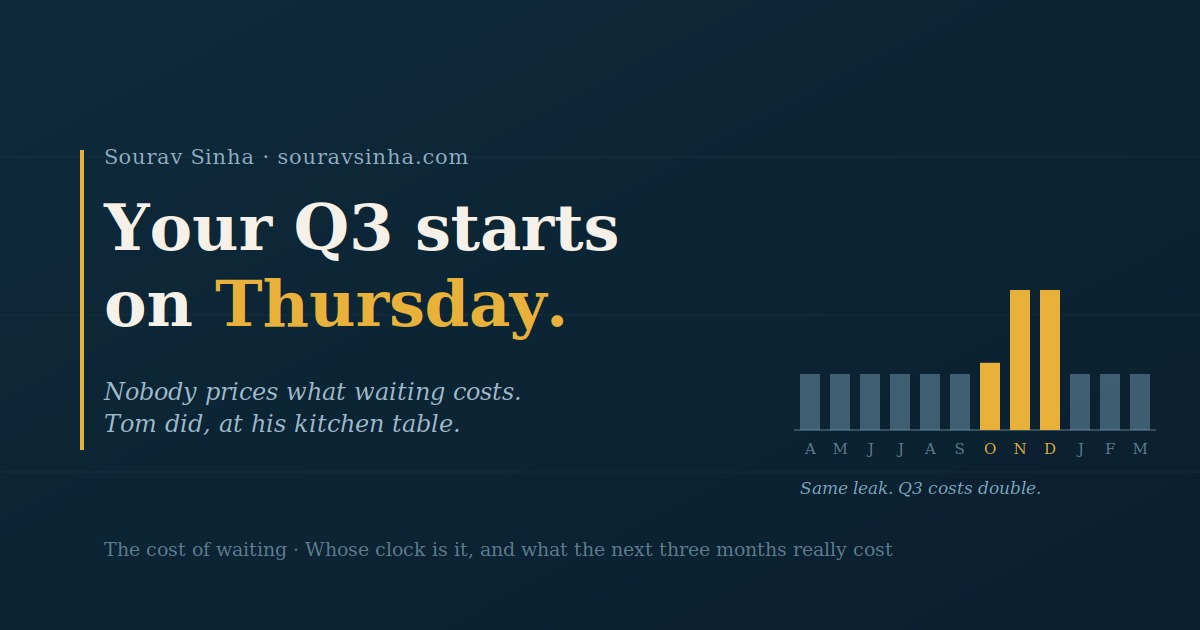
Your Q3 Starts on Thursday
Tom found the problem on a Tuesday in the last week of September, which, as it turned out, was about the most expensive week of the year to find anyth
Read More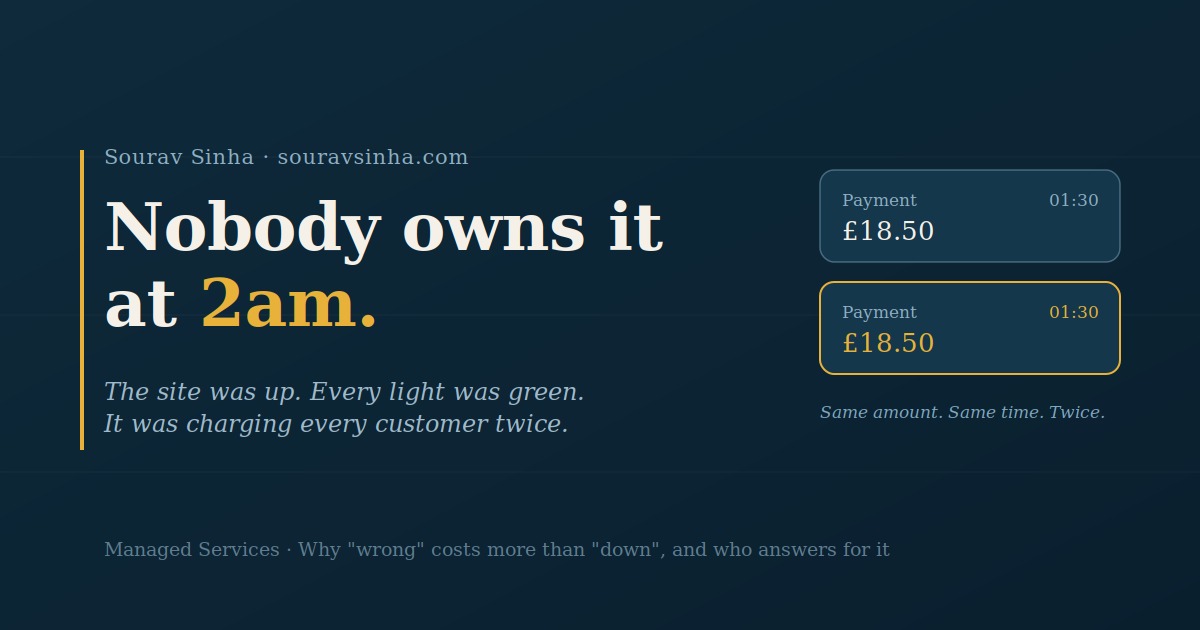
Nobody Owns It at 2AM
At half past one in the morning, Hannah's phone lit up on the bedside table with a notification from her bank. £18.50, paid to her own company. Tha
Read More
The Phone Isn’t India’s Story
This morning, before the second cup of coffee, I opened Twitter and read nine hundred words from a man I'd never spoken to. Carl Pei had posted an es
Read More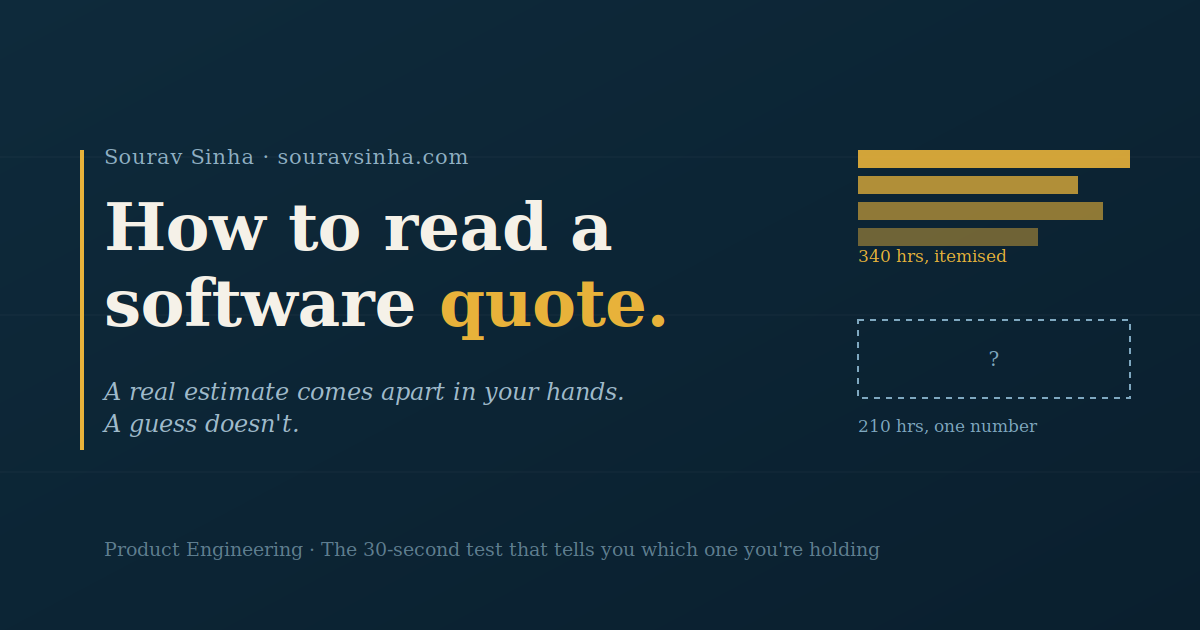
How to Read a Software Quote
Priya had two quotes on her desk and a decision to make by Friday. Priya isn't one person. Like Daniel from last week, she's a composite of CTOs and
Read More
Staff Augmentation vs Hiring: The Honest Guide Nobody Selling It Will Give You
Let me tell you about Daniel. Daniel isn't one person. He's a version of a manager I have sat across from dozens of times over the years, in Kolkata
Read More