From Loudon Street to a Garage in Ekdalia
What I learnt over coffee with the man who built Bhojohori Manna
There are people who tell you their story and there are people who let you sit inside it. Siddhartha Bose is the second kind.
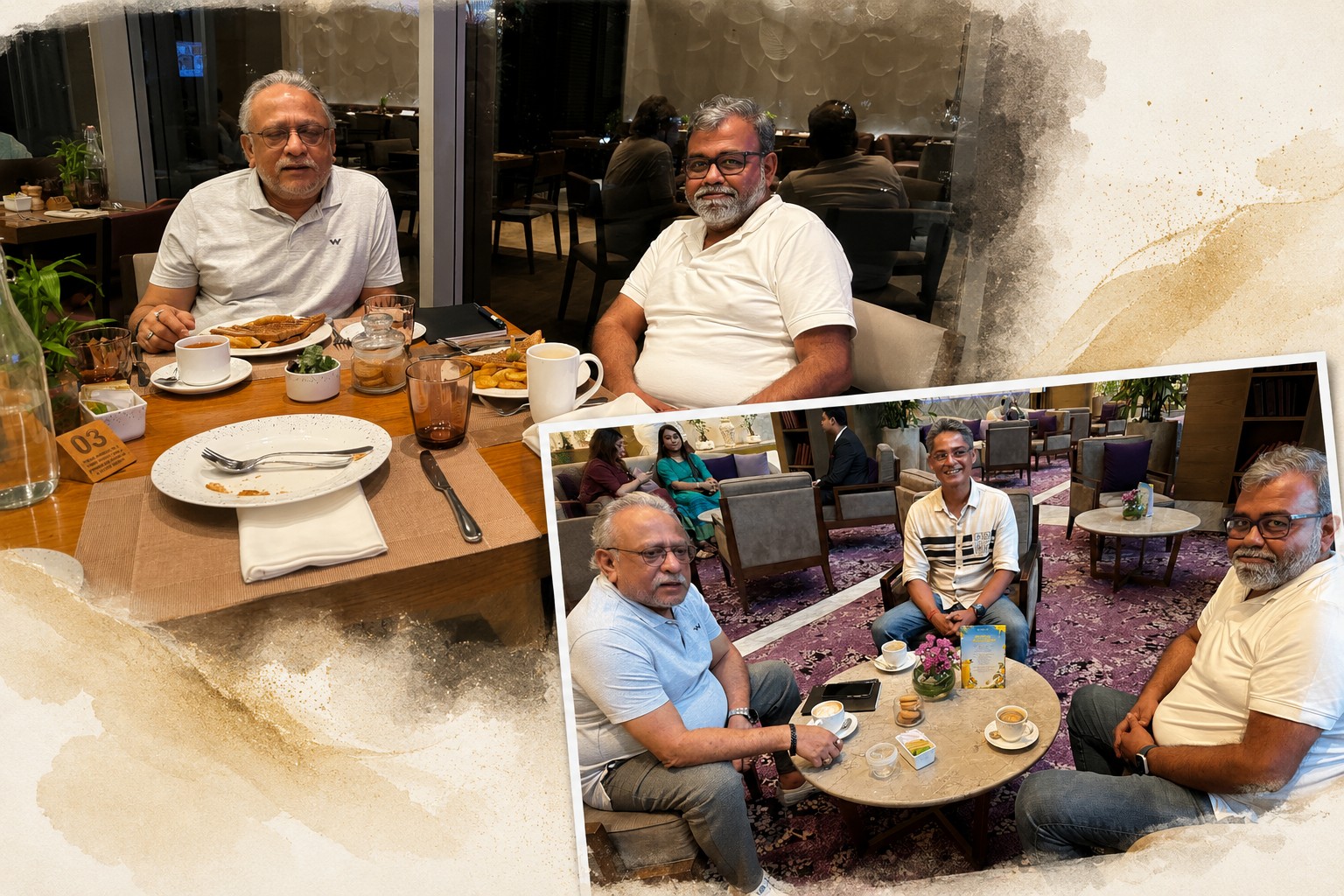
We met over coffee, which is the only correct way to meet him. The man loves his coffee the way some people love their first car. He holds the cup, he settles into the chair, and then the stories start coming. Not the polished conference-stage versions. The real ones, with the dates slightly worn at the edges and the pain still intact in the middle.
I’ll be honest about something before I go further. Before I sat down to write this, I was carrying a half-remembered version of his story in my head. I had the name of his first restaurant wrong. I had the number of outlets wrong. I had the years jumbled. It took some digging, and it took listening to him properly, to get the story straight. So what follows is the straightened version, and frankly it’s better than the one I was carrying.
Seventeen years of the Tata school
Siddhartha Bose graduated from St. Xavier’s College, Kolkata, in 1982, cut his teeth at a shipping company, and then spent seventeen years in administration with the Tata Group.
Now here’s the thing about administration in a house like the Tatas. It’s not a department. It’s a finishing school for judgement. You learn how organisations actually run, not how they say they run. You learn people. You learn detail. You learn that the small things are the big things wearing a disguise.
He told me two stories from his working years and I haven’t been able to shake either of them.
The first one goes back further than Tata, to his very first job, with a shipping company. Picture a rookie, barely out of college, and a problem nobody wanted: a Greek cargo ship stranded in Kolkata, bleeding port dues, needing to be sold off as scrap so the money could be recovered. His employers didn’t hand it to a veteran. They handed it to him, put him on a train to Mumbai, and he stayed there for weeks finding a way through. The deal was eventually worked out with Seahorse Shipping & Ship Management, a company that counted Amitabh Bachchan among its investors. A first-job kid, a stranded Greek freighter, and the Big B’s shipping outfit closing the loop. You couldn’t script it.
What stayed with him from that episode wasn’t the deal. It was the trust. Somebody senior looked at a rookie and handed him the wheel before he’d earned the certainty. I’ve spent my life building businesses and I can tell you that is the single rarest thing in corporate life. Most organisations give you responsibility only after you’ve proven you don’t need the growth it would give you. The good ones bet on you slightly before the evidence is in. That first bet, made on a young man with a stranded ship, is quietly present in everything he built afterwards.
The second story comes from the Tata years. A group of candidates came in for interviews, and his boss gave him an instruction that no HR manual would ever print. Take them out for lunch. Watch how they handle the table. The ones with proper table etiquette, call them for the next round.
Sit with that for a moment. Long before anyone was writing LinkedIn posts about “hiring for culture fit,” a Tata manager in Calcutta had understood that how a person treats a fork, a waiter and a shared table tells you more about them than an hour of rehearsed answers. Etiquette isn’t snobbery in that framework. It’s evidence. It shows whether a person notices the people around them.
The finest address, and the flaw underneath it
Around the turn of the millennium, after seventeen years, he left. And he didn’t leave to do something safe.
In 2000 he launched Jewel of the East at 6 Loudon Street, and walking in beside him was Rajeev Neogi, the partner whose name will keep returning in this story, because the two of them have travelled the entire hospitality road together from that first day. If you know Kolkata, you know what that address meant. This wasn’t a canteen with ambition. It was an upscale, multicuisine destination, two to three cuisines under one roof, coastal among them, playing in the same league as the city’s most premium names. The old restaurant directories of that era list it in the upmarket tier alongside Zaranj and Blue Fox, which tells you exactly where they had aimed.
Upscale restaurants are capital-intensive today. In the Kolkata of 2000 they were brutally so. Imported fittings, serious kitchens, trained staff, a premium lease. A man who had drawn a Tata salary for seventeen years put his chips on the finest table in town.
And then the floor gave way, and not for any of the reasons the business books warn you about.
The food wasn’t the problem. The customers weren’t the problem. The problem was a signature. He had taken the premises on lease from a man he didn’t background-check. It later emerged that the property belonged to someone else entirely. The rightful owner went to court, and the matter went all the way to the Supreme Court, and the Supreme Court granted an eviction order.
Just like that, the finest multicuisine setup in the city had no address. Everything sunk into that space, the fit-out, the kitchen, the brand he was building around a location, stood on land he never truly had.
He described that period to me plainly. It was a terrible time. A good life became a very average life almost overnight. And to be fair, that’s the sanitised summary of what it must actually have felt like, because upscale F&B doesn’t fail politely. It fails with creditors, with staff you can’t pay, with a city that watches.
Now here’s the thing I want every founder reading this to sit with. Jewel of the East wasn’t killed by the market. It was killed by a due diligence gap. One unverified counterparty. As an entrepreneur I have watched more businesses die of paperwork than of competition, and this story is the sharpest version of that truth I have ever heard from someone who lived it.
He didn’t stop, though. Even in that stretch he set up Porto Rio, which he’ll tell you was the first dedicated Indian coastal cuisine restaurant in Kolkata, and he took on the revival of a lounge bar in the heart of the city. The instinct to build didn’t die on Loudon Street. Only the illusion that a premium address is the same thing as a foundation.
A garage, twenty-five thousand rupees, and a song
What happened next is the part of the story Kolkata knows, though almost nobody knows it as an answer to what came before.
In March 2003, with a starting stake of twenty-five thousand rupees per partner and everything Loudon Street had taught him, Bose and his friends took over a struggling little Chinese restaurant running out of a garage space in Ekdalia. About a hundred and eighty square feet. A family who needed a way out, a man who needed a way back in.
And here I have to correct myself in public, because when Siddhartha Da read an early version of this piece, this is the part he pushed back on. I had framed the rebuild as essentially his. He wouldn’t accept it. Nothing of what I’ve been has ever been alone, he told me. I always made sure I belonged to a team. Not every subject is anyone’s forte, and everyone in the group contributed something vital. Then he named the name he insisted must be mentioned: Rajeev Neogi, the partner who had walked with him from the first day at Jewel of the East, through Porto Rio, and into the garage at Ekdalia. Frankly, the correction tells you more about the man than any anecdote I could write. Most founders quietly enjoy being made the hero of the story. This one read a flattering draft and asked for the credit to be shared.
Look at the architecture of that decision against the wreckage of the previous one. No premium address. No stranger’s lease. A takeover from a family who wanted the deal, not a signature from a man nobody had checked. Minimum capital, so no single failure could take anyone down. The model built on the old Kolkata pice hotel, honest home-style food at honest prices, rather than on imported chandeliers. Every single choice was the inverse of Jewel of the East. People call Bhojohori Manna a comeback. I’d call it something more precise. It was a correction. They rebuilt around the exact wound.
The name came from the Manna Dey song, “Ami Sri Sri Bhojohori Manna,” the one about the wandering cook who returns home with a style all his own. You could not invent a more fitting name for what they were actually doing.
It started by selling fish fry and cutlets. Within weeks the demand for proper home-style Bengali food pushed them into main courses, and that tiny kitchen quietly turned into a base kitchen, a hub feeding what would become the spokes. By May 2003, two months in, there were crowds waiting outside the garage on weekends. Kolkata had been starving for its own food served without apology, and nobody had noticed until a team with no formal F&B training served it.
The brand Bengal made its own
From there the story compounds. Across Kolkata first. Then Bangalore in July 2008, of all times, right into the teeth of a global recession, because homesick Bengalis in Koramangala don’t check the Sensex before craving kosha mangsho. Then Mumbai, Siliguri, Puri. A partnership became a private limited company in 2009 and then a public limited one. The brand fed film stars and politicians and the working middle class at adjacent tables, which in Kolkata is the truest certificate of arrival.
My favourite proof of what the brand became isn’t a revenue number. In 2017, when FIFA’s international delegates came to the refurbished Salt Lake Stadium ahead of the Under-17 World Cup, it was Bhojohori Manna that laid out the classic Bengali feast for them, and the word that came back was that delegates from seventy-odd countries loved it. A garage in Ekdalia to FIFA’s table in fourteen years.
And here’s where my own story quietly folds into his. When it comes to World Cup football I’ve always been a France man. When France lifted the cup in 2018, my college mates came collecting the treat I owed them, and I didn’t have to think for even a second about the venue. Bhojohori Manna, Esplanade. Where else does a Kolkata boy celebrate a World Cup? What I didn’t know that evening, passing plates around a loud and happy table, was that eight years later, in 2026, I’d be sitting across from the man who started it all, coffee going warm between us, listening to how the whole thing was built. Life folds itself in strange and generous ways sometimes.
And Bose’s fingerprints are all over the machinery underneath the nostalgia. The administration. The sales and marketing. The customer relationship systems. The in-house training and front office teams. The home delivery operation across every unit, set up long before delivery apps made it table stakes. The outdoor catering business with its corporate and celebrity client list. The relationships with media and the F&B community that kept the brand warm in the city’s imagination for two decades. I notice these things because I’ve built businesses myself. Everybody sees the daab chingri. A founder sees the CRM behind it.
Along the way he also co-founded Machhli Baba Fries, judged a regional Shark Tank style show on Hotstar, and in 2023 joined the National Restaurant Association of India as a mentor. The man collects second acts the way the rest of us collect excuses.
Ex-founder is not a word
Less than a year ago, Siddhartha Bose sold Bhojohori Manna. The next generation wasn’t ready to carry the business, and rather than let a beloved brand drift, he let it pass into new hands. That takes a clarity most founders never find. Plenty of Indian family businesses have been slowly strangled by the sentiment that selling is defeat.
Some time after the sale, I noticed his LinkedIn described him as the ex-founder of Bhojohori Manna. I told him to change it, and I’ll tell you what I told him.
Ownership is a transaction. Founding is history. You can sell shares. You cannot sell the fact that in March 2003 you stood in a garage in Ekdalia and started something. Nobody says Phil Knight is the ex-founder of Nike. The brand may belong to someone else now. The founding belongs to him forever.
He changed it. Founder of Bhojohori Manna. As it should read till the end of time.
The fourth act
So what does a man do after Tata, after Loudon Street, after building and selling the most loved Bengali food brand of his generation?
He orders another coffee and starts again.
Today he runs Globe & Garnish, an F&B consulting practice where he advises entrepreneurs setting up cafes and restaurants. Project setups, kitchens, interiors, operations, the works, drawn from more than two decades of doing it with his own money on the line.
And I want you to see the poetry in this, because it’s the reason I wrote this piece. The man who once signed a lease without checking who really owned the building now spends his days making sure young founders never make that mistake, or the hundred quieter ones that follow it. His scar tissue has become other people’s syllabus. That is the best possible use of a wound.
When we meet, he doesn’t lead with the triumphs. He leads with the stories, the stranded Greek ship, the Tata lunches, the garage, the queues, and he tells them with warmth rather than bitterness, including the ones that cost him everything. Years of building businesses have taught me to read people quickly, and here’s my honest read. Siddhartha Bose is a lovely human being who happens to have built great businesses, and not the other way around. In this industry, in any industry, that ordering is rarer than the success.
Somewhere in Kolkata right now, a first-time cafe founder is sitting across a table from him, coffee going cold, listening to a story about a building on Loudon Street. If that founder is paying attention, they’re receiving twenty-five years of tuition for the price of a cup.
A shipping company once trusted a rookie with a stranded Greek freighter before he believed in himself. He’s spending his fourth act extending that same trust to strangers.
That’s not a career. That’s a life well built.
If you’re an entrepreneur looking to enter the F&B space, Siddhartha Bose consults through Globe & Garnish. Find him on LinkedIn. Order the coffee. Ask about Loudon Street.

Recent Comments
Related blog posts
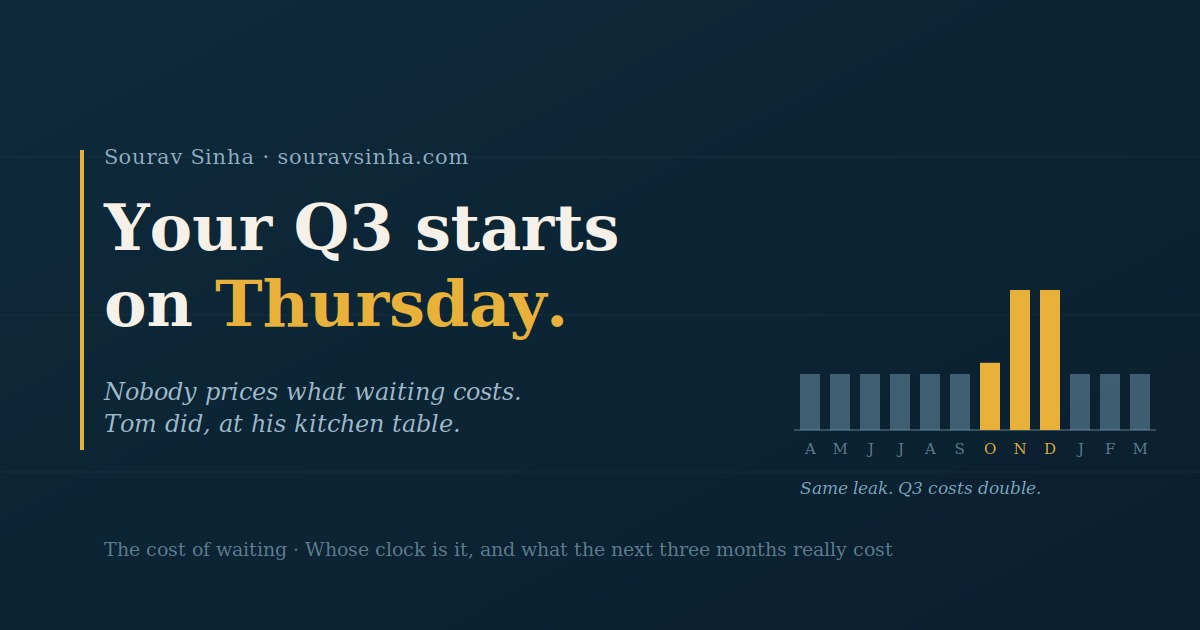
Your Q3 Starts on Thursday
Tom found the problem on a Tuesday in the last week of September, which, as it turned out, was about the most expensive week of the year to find anyth
Read More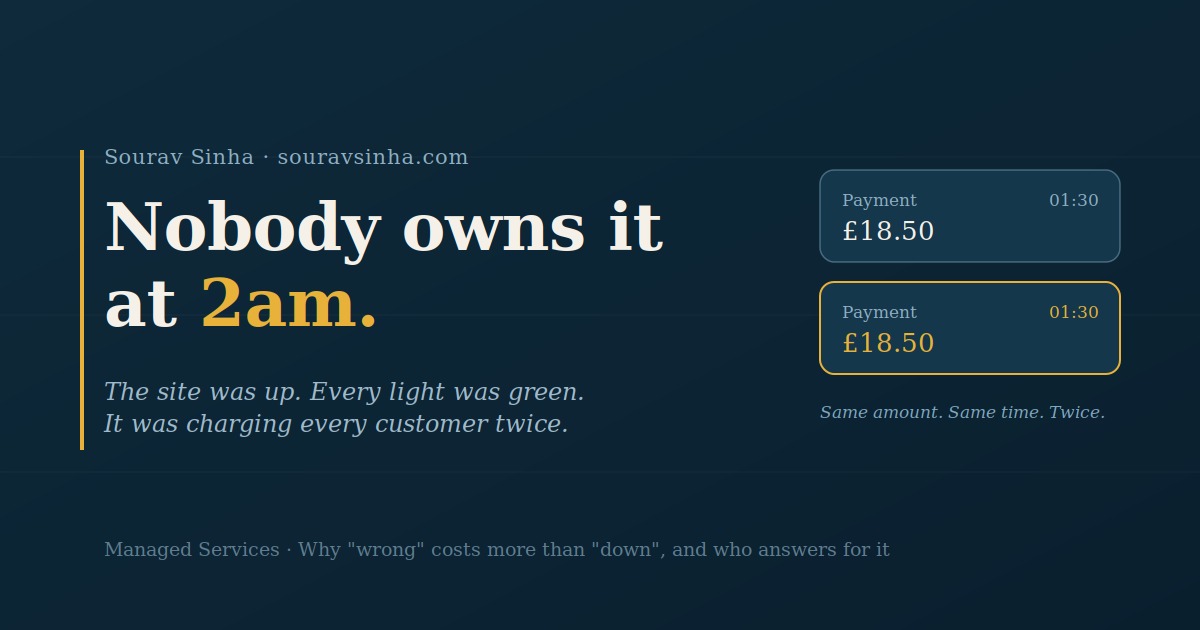
Nobody Owns It at 2AM
At half past one in the morning, Hannah's phone lit up on the bedside table with a notification from her bank. £18.50, paid to her own company. Tha
Read More
The Phone Isn’t India’s Story
This morning, before the second cup of coffee, I opened Twitter and read nine hundred words from a man I'd never spoken to. Carl Pei had posted an es
Read More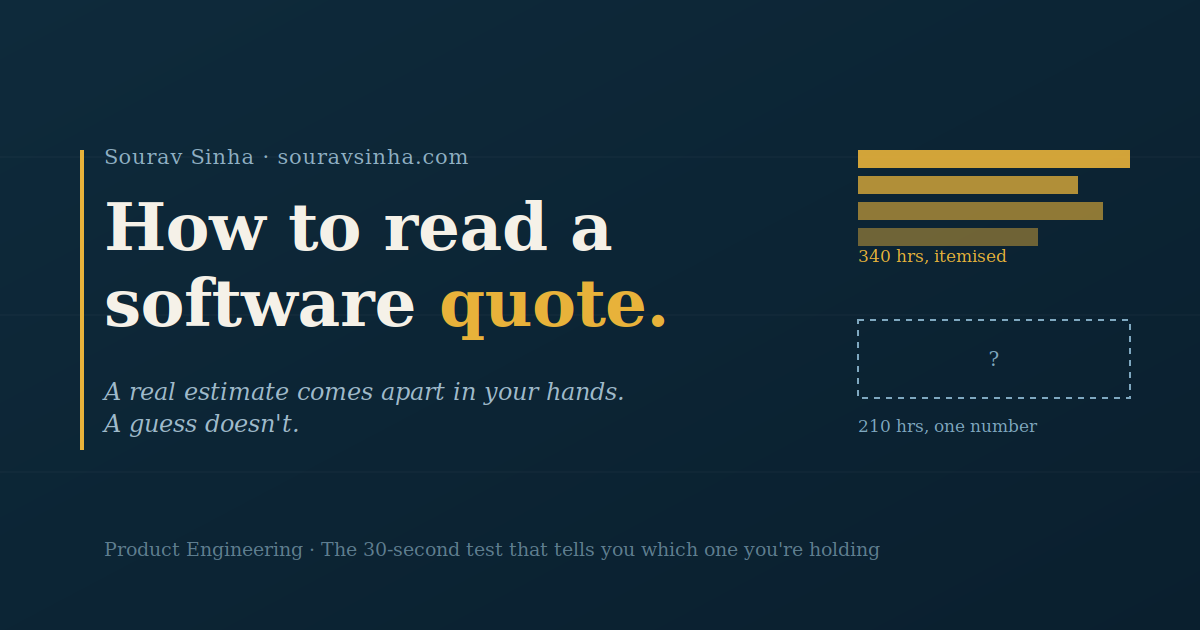
How to Read a Software Quote
Priya had two quotes on her desk and a decision to make by Friday. Priya isn't one person. Like Daniel from last week, she's a composite of CTOs and
Read More
Staff Augmentation vs Hiring: The Honest Guide Nobody Selling It Will Give You
Let me tell you about Daniel. Daniel isn't one person. He's a version of a manager I have sat across from dozens of times over the years, in Kolkata
Read More
You are a writer par excellence.
Humbled is the word.