Why Is Retention the New Acquisition for Growing Brands?
Most D2C founders treat the post-purchase experience like a courtesy. A thank you email. A shipping notification. Maybe a review request three weeks later. Then silence, until the next paid acquisition campaign drops another stranger into the top of the funnel.
That is not a business model. That is a leaky bucket with a very expensive tap.
If you read the last post in this series, you know that reaching a 5:1 LTV to CAC ratio is fundamentally a unit economics problem, not a marketing one. CM3 tells you whether each order is actually generating cash. But CM3 is only the diagnostic. The 90-day post-purchase window is where you do the surgery.
The math is straightforward and worth sitting with. A customer who buys from you a second time within 90 days of their first order is substantially more likely to become a repeat buyer for life. That second purchase is not just incremental revenue. It is proof that a habit is forming. Every rupee you spend acquiring a customer and then losing them to silence is a rupee that funded someone else’s loyalty program.
The question is not whether to build a post-purchase flow. The question is whether yours is engineered or accidental.
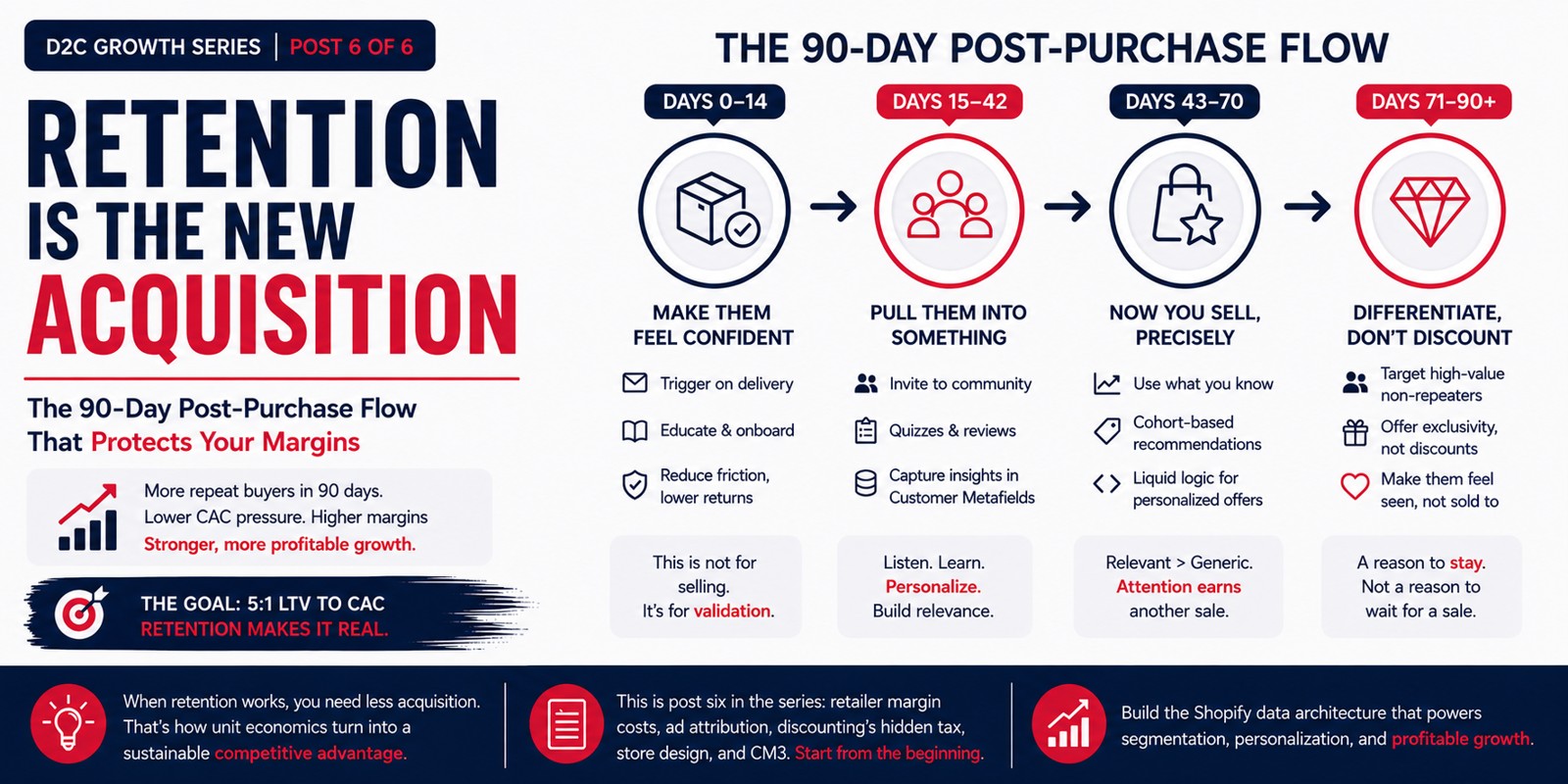
The first two weeks are not for selling
This is where most brands get it wrong immediately.
The product has just arrived. The customer is either validating their decision or quietly regretting it. The worst thing you can do in this window is pitch them something else. The best thing you can do is make them feel like the purchase was the right call.
Shopify Flow lets you monitor delivery status in real time. The moment your logistics provider marks the package as delivered, that is your trigger. Not to upsell. To educate. Send them how to get the most from the product. Anticipate the questions they have not asked yet. Reduce the friction between what they expected and what they received. A well-timed, genuinely useful message here does two things: it cuts your return rate, and it starts building the relationship before the next sale becomes relevant.
Weeks three to six: pull them into something, not toward something
Once the product has been in their hands for a few weeks, they have an opinion about it. This is when you stop broadcasting and start listening.
Invite them to join a community, take a preference quiz, or submit a review. Not with a discount as a bribe, but because the invitation itself signals that they are now part of something. The insight you gather here is genuinely valuable. Use Shopify’s Customer Metafields to store it. If they tell you their skin type, their training goal, the problem they were trying to solve, tag that profile. Every future communication you send that person should reflect what they told you. Personalization is not a feature. It is the difference between a message that feels like it was written for someone and one that clearly was not.
Weeks seven to ten: now you sell, precisely
By this point you know who this customer is, what they bought, and what they told you about themselves. You have a reasonably good sense of when their initial supply or interest is starting to taper. This is when a well-timed, hyper-relevant recommendation lands differently than it would have on day three.
The mistake here is defaulting to generic product recommendations. Shopify’s data shows you what customers in this specific cohort bought as a second item. Use Liquid logic in your email templates to surface that, not a random bestseller. The recommendation should feel less like a suggestion and more like you were paying attention.
The final stretch: do not discount, differentiate
If someone has received your product, engaged with your community, and still has not bought again by day 70, they are not waiting for more information. They are waiting for a reason.
A discount is the laziest reason you can give them, and it trains them to wait for one every time. Instead, build a dynamic customer segment in Shopify Admin for high-value first buyers with no second purchase at day 75. Target that segment with brand-values content, not a coupon. An invitation to a loyalty tier. An exclusive gift with a future purchase. Something that makes them feel like they are being seen, not marked down.
The number that changes when you do this right
When a higher percentage of your first-time buyers convert to repeat cohorts within 90 days, the pressure on your paid acquisition channels drops. You are not acquiring new customers to replace the ones you lost. You are building on a base that is already bought in.
That shift is what makes the 5:1 LTV to CAC ratio an operational reality rather than a target you keep missing. Acquisition does not get cheaper. But when retention is working, you need less of it.
This is post six in the series. The earlier posts cover retailer margin costs, ad attribution, discounting’s hidden tax, store design, and CM3. If you have not read them, start from the beginning.
If you want to build the Shopify data architecture that makes this kind of segmentation and personalization actually work in practice, Brainium is the team to talk to.

Recent Comments
Related blog posts
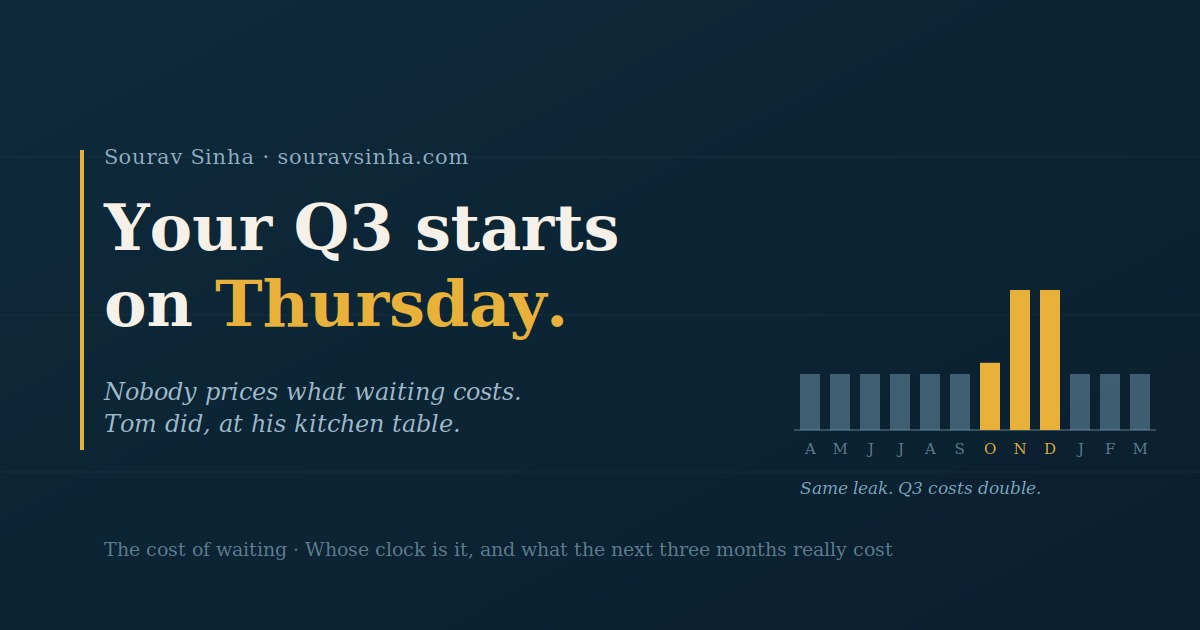
Your Q3 Starts on Thursday
Tom found the problem on a Tuesday in the last week of September, which, as it turned out, was about the most expensive week of the year to find anyth
Read More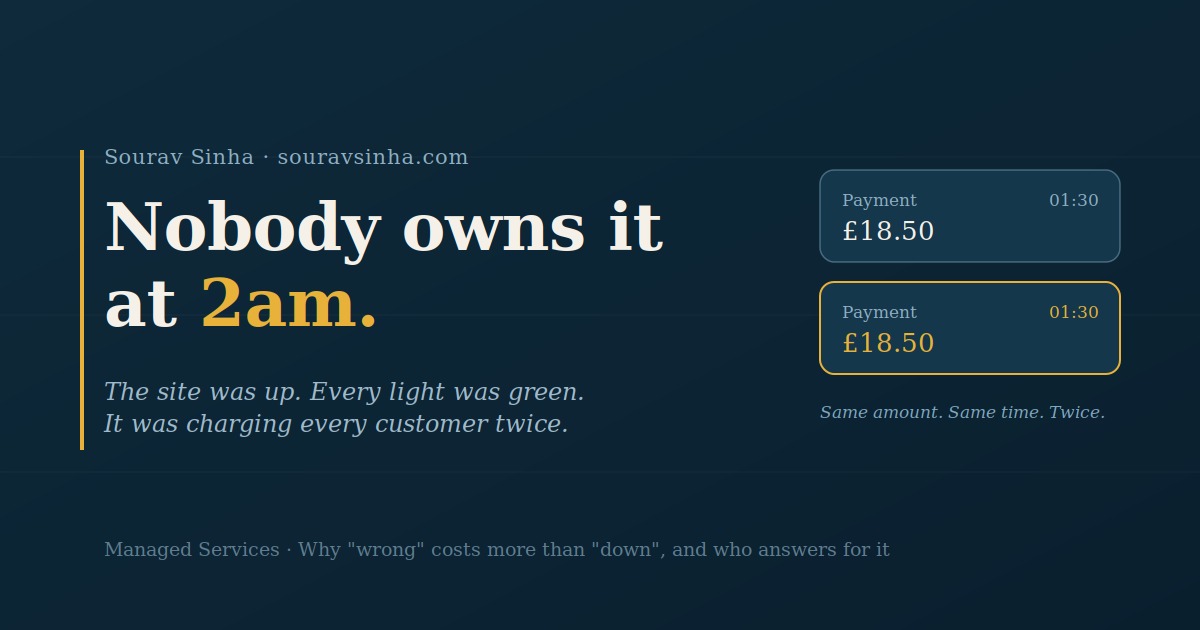
Nobody Owns It at 2AM
At half past one in the morning, Hannah's phone lit up on the bedside table with a notification from her bank. £18.50, paid to her own company. Tha
Read More
The Phone Isn’t India’s Story
This morning, before the second cup of coffee, I opened Twitter and read nine hundred words from a man I'd never spoken to. Carl Pei had posted an es
Read More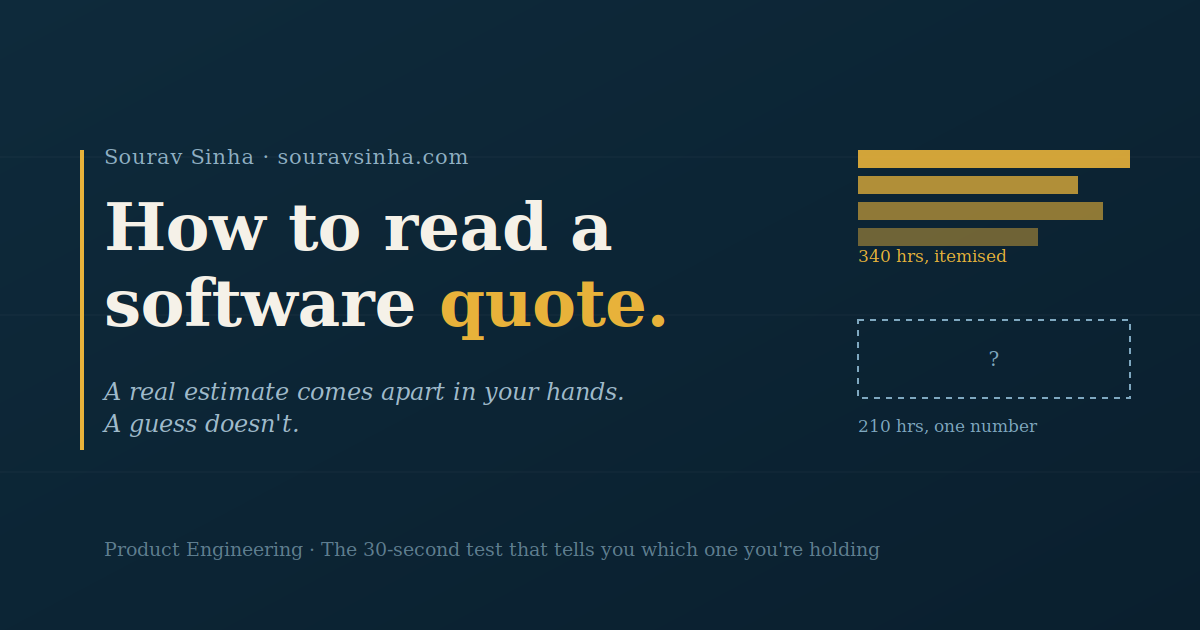
How to Read a Software Quote
Priya had two quotes on her desk and a decision to make by Friday. Priya isn't one person. Like Daniel from last week, she's a composite of CTOs and
Read More
Staff Augmentation vs Hiring: The Honest Guide Nobody Selling It Will Give You
Let me tell you about Daniel. Daniel isn't one person. He's a version of a manager I have sat across from dozens of times over the years, in Kolkata
Read More
[…] The retention engine we built in the last post is only as powerful as the customer velocity feeding it. A 90-day flow cannot save a customer who never converted cleanly in the first place, or one who clicked “buy” with a knot of uncertainty in their chest that later became a return request. If your PDP is converting cold mobile traffic at 1.5 to 2 percent, which is exactly where the industry average sits, your CAC is structurally inflated. Not because your ads are bad. Because the page at the bottom of the funnel is leaking. […]