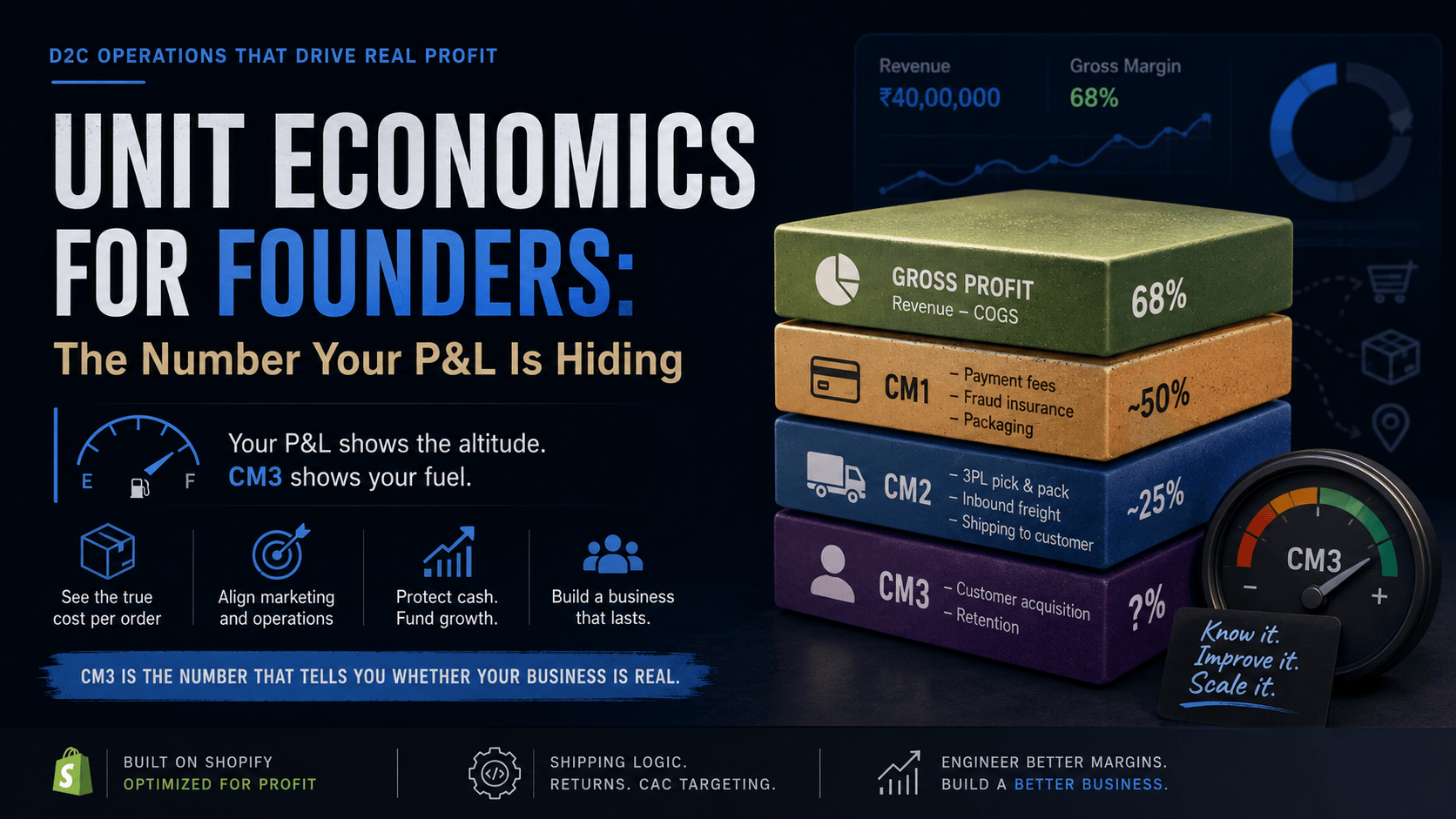
How to Understand Unit Economics: The Number Your P&L Is Hiding
He showed me his numbers on a call last October.
Forty lakh rupees in monthly revenue. A gross margin of 68 percent. A marketing team that was hitting its ROAS targets every single month. His CFO had told him the business was healthy. His investors were happy. He was preparing for a Series A.
“So why,” he said, looking genuinely confused, “are we running out of cash?”
I asked him one question. What is your CM3?
Silence.
Not the silence of someone who knows the answer and is calculating it. The silence of someone who has never heard the term.
That conversation is not unusual. It happens constantly with D2C founders who have learned to read a P&L but have never been taught to read their unit economics at the order level. They are flying a plane by looking at the altimeter and ignoring the fuel gauge.
The illusion that a good gross margin creates
A 68 percent gross margin looks wonderful on paper. It means for every hundred rupees your customer pays, sixty-eight rupees remain after the factory cost of making the product. That number will make a banker smile and an investor nod.
But that number has not yet paid for anything else.
It has not paid your Shopify payment gateway fee, which cuts into every single transaction. It has not paid the fraud insurance you carry because chargebacks are real. It has not paid for the packaging your brand team spent three months obsessing over. It has not touched the 3PL that picks, packs, and ships your order, or the inbound freight to get your inventory there in the first place.
It has absolutely not paid for the customer you spent money acquiring.
By the time you account for all of that, sixty-eight percent can quietly become twelve. Or seven. Or negative.
This is not a hypothetical. This is what happened to the founder on that call. His gross margin was real. His CM3 was a disaster.
Breaking the margin stack down honestly
Think of your order economics as a layer cake where each layer strips away more of what you thought you had.
Gross Profit is the top layer. Revenue minus what it cost to make the thing. It is the number most founders know by heart.
Contribution Margin 1 peels off the transactional costs that sit between you and your revenue. The payment gateway takes its cut. Fraud insurance takes its cut. The packaging that your product ships in takes its cut. None of these are big individually. Together they are relentless.
Contribution Margin 2 is where logistics make their move. Your 3PL charges you a pick-and-pack fee on every order. Inbound freight to move inventory into the warehouse is not free. And the shipping cost to actually put your product in the customer’s hands is the largest variable in the whole stack, one that swings dramatically by zone, by weight, by dimension.
Contribution Margin 3 is the final truth. CM2 minus your customer acquisition cost and your retention expenses. This is the actual cash your business generated from that one order, before any fixed cost like salaries or software or rent touches it.
CM3 is the number that tells you whether your business is real.
What CM3 forces you to see
The reason most founders avoid this metric is not laziness. It is that CM3 is brutally honest in ways that higher-level metrics are not.
A product with an 80 percent gross margin and a high return rate can have a negative CM3. Think about what a return actually costs. You paid to ship the product to the customer. You pay again to bring it back. You may not be able to resell it at full price. You have already paid the CAC that acquired the customer who sent it back. Every one of those costs hits before a single rupee of revenue is protected.
CM3 also forces your marketing team and your logistics team into the same conversation for the first time. If one product category has oversized packaging that triples the shipping cost, your marketing team cannot spend the same CAC on acquiring customers for that category as they do for a slim, lightweight product. Without CM3 visibility, they would never know. They would keep hitting their ROAS targets while quietly destroying cash.
This is the alignment problem at the heart of most D2C operations. Everyone is optimizing for their own metric. CM3 is the one number that makes every department’s problem everyone’s problem.
Three levers Shopify gives you to engineer a better CM3
The good news is that Shopify’s architecture in 2026 is genuinely built for this kind of operational precision. You are not fighting the platform. You just have to know where to pull.
The first lever is shipping logic. Flat-rate shipping is a margin assumption dressed up as a policy. In reality, the cost of shipping one order varies enormously by the actual dimensions and weight of what is in the cart, and by where the customer lives. Shopify Functions lets you calculate real-time dimensional weight and 3PL costs at checkout and pass a portion of that volatility to the customer dynamically. You protect your CM2 without a blanket price increase on every order.
The second lever is returns. A return is not just a lost sale. It is a double shipping cost and a lost CAC, the three most expensive things that can happen to your CM3 simultaneously. The fix is not a returns portal. The fix is upstream, on the product page itself. Shopify’s Metaobjects let you serve hyper-specific sizing guides, interactive fit charts, and location-aware product information on every PDP. Eliminate two percent of your return rate and watch what happens to your margin per order across tens of thousands of transactions.
The third lever is CAC targeting. Most brands feed their ad platforms an audience and ask for conversions. Smarter brands tag their highest-CM3 customer segments in Shopify’s customer data and use server-side integrations to build lookalike audiences from those profiles specifically. You stop acquiring high-volume, low-margin customers and start acquiring people who look like your most profitable cohorts. The spend stays the same. The quality of what it buys changes entirely.
From the balance sheet to the operating room
The founder who called me last October is still in business. He did not raise the Series A he was planning. He spent six months instead fixing his CM3 by category, renegotiating his 3PL contract, restructuring his shipping logic, and rebuilding his paid acquisition audiences around his actual profitable customers.
His revenue dipped. His bank balance grew for the first time in two years.
He told me recently that understanding CM3 was the single most disorienting and clarifying thing that had ever happened to his business. Disorienting because it revealed how much of what he thought was profit was not. Clarifying because once he could see the problem precisely, fixing it was a matter of engineering, not guesswork.
That is the shift CM3 creates. From managing a story you tell investors to managing the actual mechanics of your business.
Reaching a 5:1 LTV to CAC ratio is not a marketing challenge. It is a unit economics challenge. And you cannot solve it if you are still reading the altimeter and ignoring the fuel gauge.
This is the fifth post in my series on building a smarter D2C business on Shopify. If you have not read the earlier pieces on retailer margin costs, ad attribution, discounting’s hidden tax, and engineering your store to drive purchases naturally, go back and read them in order.
If you want to see what your actual CM3 looks like and build the data pipelines to manage it in real time, Brainium does exactly this kind of work.

Recent Comments
Related blog posts
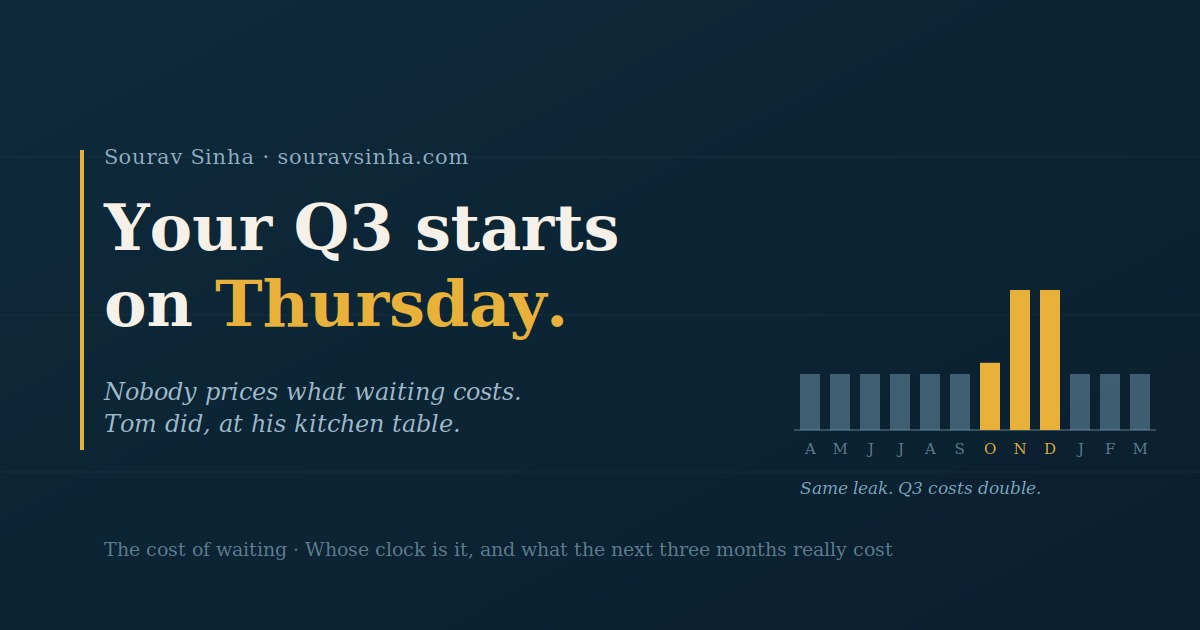
Your Q3 Starts on Thursday
Tom found the problem on a Tuesday in the last week of September, which, as it turned out, was about the most expensive week of the year to find anyth
Read More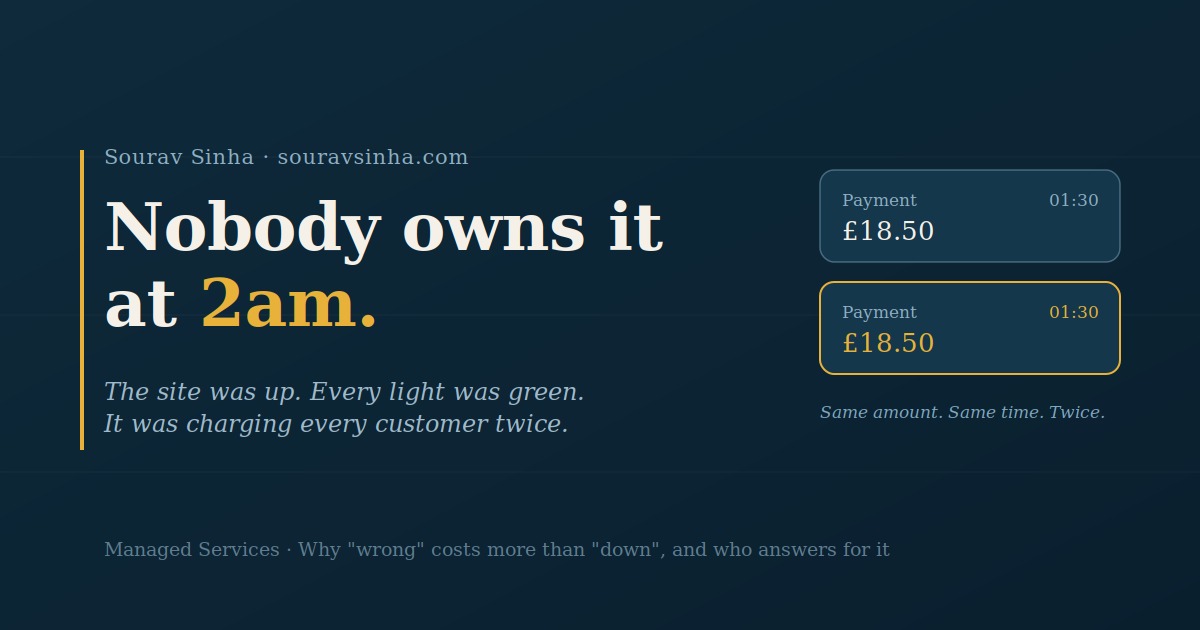
Nobody Owns It at 2AM
At half past one in the morning, Hannah's phone lit up on the bedside table with a notification from her bank. £18.50, paid to her own company. Tha
Read More
The Phone Isn’t India’s Story
This morning, before the second cup of coffee, I opened Twitter and read nine hundred words from a man I'd never spoken to. Carl Pei had posted an es
Read More
How to Read a Software Quote
Priya had two quotes on her desk and a decision to make by Friday. Priya isn't one person. Like Daniel from last week, she's a composite of CTOs and
Read More
Staff Augmentation vs Hiring: The Honest Guide Nobody Selling It Will Give You
Let me tell you about Daniel. Daniel isn't one person. He's a version of a manager I have sat across from dozens of times over the years, in Kolkata
Read More
[…] What this means in practice: a 10 to 15 percent post-purchase conversion rate on a product that costs you 35 percent of revenue to fulfil generates contribution margin at a rate your primary acquisition business cannot match. The revenue is real. The CAC allocation is zero. The CM3 improvement is direct and immediate. […]