 It was in the first week of March while coming from Puri that I last went to Express Food Plaza, a nice restaurant near Kolaghat.
For the first time after Covid-19, I went out once again yesterday to have lunch and guess what the place was once again Express Food Plaza.
Mukesh and Asif picked me up from my place at around 1 PM. The traffic was normal but thankfully no traffic congestion because Andul Road has a nasty history of traffic jams. On the way to Kolaghat, you have to pass through one toll plaza at Dhulagarh. The government of India last year mandated FasTag for all cars to stop congestion at the toll plazas but it’s not 100% implemented yet. The funny thing is that the technology used and the people who are managing the system are making the FasTag lanes slow-moving and this resulted in us losing 15 minutes at the toll plaza.
In between Dhulagarh and Kolaghat there are 2 big vegetable markets and it was quite surprising to see that not even 10% of the people wearing masks. Masks have become like helmets and seat belts in India – the rule is there but most don’t follow. The bigger problem is that without masks you are not fined too hence nobody cares. Just proves how badly we implement anything in India.
 The plan was actually to have food at Sher – e – Punjab Hotel but when we reached there, the place was filled with people with a one KM line to get a seat. It didn’t sound a good idea to stand in line and that too under the hot sun standing in a queue and so the next best idea was to have food at the Express Food Plaza.
People who have gone to this place will know that the area is so huge that there is never a waiting time to get a table. But I thought I will see some difference this time since with social distancing and all it was expected for the tables to be spaced out.
How wrong was I!
There was no one at the gate who will sanitize you. This goes against the basic protocol that the Government has issued. The sitting arrangement had no change. It was exactly as it was in the first week of March. Quite understandably the place was not filled but the distance between tables was way too less. As soon as we came in, no one bothered to clean the table in front of us. Same case with the plates. I think it should be a basic protocol to clean the table and the plates with proper sanitised papers in front of the customers. I am not sure why that’s not being followed.
This just shows that people just don’t listen to government advice and this country will only change when we the people try and understand that following the rules is the duty of all citizens of the country.
The waiters were all wearing masks and gloves and caps but no one was sanitising the hands in front of us while bringing the food to us. What’s happening inside the kitchen can be well understood.
My question is why doesn’t the government get more strict in these matters? We need proactiveness from the authorities to make these businesses responsible. We are fighting against a dreaded virus so we better get more strict in these matters.
Today India reported more than 87,000 new cases and if people don’t follow any protocol the entire health system might crack. When are we going to realise that?
Anyways, enough of gyaan, now let’s talk about food.
I have known Asif for more than 25 years. If his name was not Asif – we could easily call him SOSI (SO from Soup and SI from Pepsi). And true to his name he ordered Soup. We also ordered Tandoori Chicken – didn’t have this dish for more than 6 months.
The food at Express Food Plaza is good. For the main course Asif ordered Fried Rice & Chilly Chicken, Mukesh ordered Masala Kulcha & Butter Chicken and I went for Alu Paratha with Ommellete. Once again went for Alu Paratha because didn’t have this for more than 6 months. We followed this up with Pepsi and true to His name, Asif (SOSI) had twice the amount of Pepsi that I and Mukesh had.
Anyways it was good fun having food at a restaurant after so long though the issue of not following the protocols by the restaurant left a bad feeling. It was equally good to drive through 60 kilometres each way.
The car back on the roads and I guess we are not far off from our next long journey. Where will it be? We don’t know yet.
I was finally dropped off at my place around 5.30 PM.
So have you been to a restaurant recently? What has been your experience?
I once had a boss who was more of a teacher. With him, each day was learning. During his tenure, he never told me “how” to do any activity. He just kept telling me “why” to do the particular activity. Till that day, I was always told “what” to do. First time in my life I got a reporting head telling me “why” to do it.
Today when I look back, I believe he followed the SERVE model of leadership:
S: See the future – As a leader one needs to have the foresight that comes with experience & how you inspire your team towards that goal differentiates you from the rest.
E: Engage & Develop Others – How well you wear your mentorship hat will ensure how well your team develops into a winning team.
R: Reinvent – Learn, Unlearn & Relearn. In this ever-changing technological landscape, as a leader, you need to be abreast with the latest happenings around you. How flexible you are in this matter plays an important role in your development as a quality leader.
V: Value Relationships – How well you nurture your relationships be it with your customers or your team members will make your team members look up to you.
E: Empowerment – Give confidence to your team members to explore without fear.
Thoughts?
My water purifier suddenly stopped working. My wife immediately called up the customer service of Eureka Forbes and they arranged the service engineer within 2 hours. My machine was back and running within another hour. That’s customer service.
Eureka Forbes is famous for providing great customer service and I have never changed my brand for several years for this precise reason. They made me “wow” once again.
Not for a moment, they said that they are filled with customer requests so there might be a delay. The crisis was not an excuse for them but an opportunity to “wow” the customer many times over.
This is an example of how a company ensures to keep a customer on board for a lifetime.
So what are the important traits of great customer service?
1. Communication Skills
2. Customer Empathy
3. Owning up to a problem
4. Problem Solving Skills
5. Time Management
6. Patience
Most importantly the customer has to be happy.
What has been your experience related to great customer service? What traits you think are an absolute necessity to excel in great customer service?
We have these annual cricket matches and tournaments in our company and for the last few years, the constant in all such tournaments have been the “Player of the Series” – Avik. Invariably he will end up being the best player if not the best batsman/best bowler. Even in the recent corporate tournament, he was the go-to man of the team.
Undoubtedly he is a very good player but we have other good players as well. How is he so consistent, especially in a corporate set up? Is there some distinct difference between him and others?
This brings me to the topic of “Fighting Hypothesis”. Avik is a leftie. He bats and bowls left-handed. Only 11% of the population in the world is left-handed and hence left-handed people in direct one-one combat are more prepared against right-handed people. For example, as a leftie, you will practise against right-handers most of the time but a rightie won’t have that option because he will mostly practise against right-handers. This makes left-handed people in direct sports have a distinct advantage. The advantage is most visible in combat sports as well as one to one sports like Tennis. It’s also visible in cricket.
What do you think? Do left-handers have a distinct advantage against right-handers?
Quite a few years back, I was introduced to a person when I wanted to purchase a new LIC policy.
That lead to a long term relationship and he became my sole agent related to mutual funds as well as medical insurance.
When we started the company and as we got some free-flowing cash we decided to park some of our funds in Liquid and Balanced Mutual Funds.
Quite naturally I turned to him again. As it turned out he was an expert in individual account handling but didn’t have much knowledge in corporate accounts. What this meant was that we didn’t get the personalised support that we were expecting from him.
In the meanwhile around 2014, I was introduced by my neighbour with another person who was also into similar nature of business. I was attached with the earlier person and I didn’t change my agent but this new person used to meet me and give me tips on financial matters and more so about corporate treasury related strategies.
The earlier person’s support kept dwindling day by day and he in fact stopped visiting us regularly because he was unable to solve a lot of our corporate issues. I decided to get a LIC policy done through this new contact for my wife and she started investing in Mutual Funds too through him. Within a month or so I could realise the difference in how he was helping us with crystal clear information.
I think proposed his name to my board of directors to have him as our agent for Mutual Fund Transactions. Little by little over the next one year he took over. He helped us tremendously during any crisis situation. Never forgot to return a call and always made it a point to visit us at least once in a month. His customer service was exemplary and it was profound during the DHFL crisis, YesBank crisis, and also in between the Pandemic of Covid-19.
Now he has made sure that we can transact everything online without any external help.
This is what defines great customer service. Understanding the client’s problem and solving it anyhow and keeping in touch with the customer at all times. By having such traits you build a relationship for life.
Thoughts?
“Why Papa?, my 5-year-old daughter asked when I asked her to stop watching TV. This was not the only time she added a “Why” to any statement because I hear “Why” multiple times throughout the day. And till she gets an answer to her satisfaction, ”Why” keeps repeating in a loop. I get exasperated by answering but she doesn’t.
Generally, as we grow up the questions vanish and one of the reasons could be our education system where you get a pat on your back if you “answer” a question correctly but you rarely get lauded for asking a pertinent question.
Have you noticed that in a corporate setup, it’s mostly “What” or “How”? Does “Why” come to your notice? It doesn’t because once again it is related to the culture where we were brought up with the mindset of “What” to do and “How” to do it. We don’t ask “Why” to do it!
I think the path to greatness lies in “Why”. When people ask “Why” it will lead to the right answers for “How” & “What” – which will then lead you towards greatness.
Do you believe in building an organisation where asking “Why” is encouraged or do you prefer the “What” & “How” question? Does your system encourage people to ask questions?
If the answer is YES then “Why”?
If the answer is NO then “Why”?
Just a couple of days back, India celebrated 74th Independence Day.
Politically we have been independent for so many years but are we financially independent? I am no economist and I really can’t get into the complete details of how India can become a more economically thriving nation. But here I wish to discuss how we can individually become financially independent.
As a youngster, one needs to understand the magic of compounding. Unfortunately, our schools do not teach us about Financial Management so many years are lost before people actually understand the importance of Savings & Investments. The time period is very important for your money to grow and hence the earlier you start investing it’s better for you.
So what is the ideal way or plan to get yourself financially independent?
Independence means that you are in your control when it comes to doing any stuff and you are not dependent on anyone to fulfill your needs.
Let’s start with an example. Let’s assume that you are earning Rs. 30,000 Per Month NET Salary.
Monthly Salary: Rs. 30,000
Yearly Salary: Rs. 3,60,000
First, divide this money into 2 parts.
Part 1: 20%
So that is Rs. 72,000 per year. This is what you should save/invest for the year.
Out of this:
Part One: 5% of your total salary which is Rs. 18,000 per year should go towards insurance premiums. Please note what’s important to note here is that never to fall into the trap of Endowment Policies or ULIPs. Your first target should be to get a “Term” Policy. Ideally the SUM ASSURED should be 10 Times of your yearly salary.
Once you have taken care of your Term Policy, think of a Health Insurance. Looking at current healthcare costs, one should have a Mediclaim of at least Rs. 10 Lakhs.
After paying these 2 premiums, calculate if you have any balance from the kitty of Rs. 18,000. If there is balance then start a Recurring Deposit (RD) with your bank.
Part Two: 5% of your total salary which is Rs. 18,000 per year. This should be invested in Secured Products like PPF (Public Provident Fund), NPF (National Pension Fund), FD (Fixed Deposits), Debt Mutual Funds (Liquid Funds). Ideally, over a period of time, your Liquid Fund should hold 9-12 Months of your expenses which you can call your Personal Emergency Fund.
Part Three: 10% of your total salary which is Rs. 36,000 per year. This should be invested in Equity. If you are interested to invest in Gold or Property then it should come from this portion of your money. So ideally start with a basket of 3 Mutual Funds which can be like below:
Large Cap
Mid Cap
Small Cap/Diversified
You can start with a SIP (Systematic Investment Plan) of Rs. 1,000 per month, in each fund under the above 3 categories.
Part 2: 80%
After taking care of your savings and investments you should think of the expenses. Now that 20% of your earnings have been saved or invested, you can plan up your expenses with the balance of 80%.
Ideally, this should also be broken up into 2 parts.
Part One: 30% of your salary which is Rs. 9000 per month. This is the maximum amount that you should spend on servicing any debt. That means the maximum amount that you should pay as an EMI or Credit Card Bill.
Part Two: 50% of your salary which is Rs. 18,000 per month. You need to plan all your monthly expenses within this amount.
It’s always difficult to start but when you make a plan and execute this as a habit, you will get used to it.
Now let’s extrapolate the above example with a hypothesis of a 10% raise every year for the next 15 years. How much will be your savings after 15 years?
The answer is – You will be having a kitty of more than Rs. 40 Lakhs at the end of 15 years.
This is a very conservative figure because there could be many years where your raise would be more than 10% and if you have the discipline to increase your savings/investments amounts equally as per your raise – this kitty would be far bigger. This is the magic of compounding.
Generally, the problem is to be consistently following the above rules. Our need change into desires and then we end up taking debts to fulfill those desires and very soon we fall under the debt trap. Once an individual falls in the debt trap it can take years for that person to get back to normalcy and by that time stress adds up which takes a toll on his health. When you fall into a debt trap, it’s very difficult to come back and become debt free because you never know if there is a disruption hiding round the corner.
Think of the current situation of Covid-19. People who saved money for years are leading a comfortable life (financially) even under this downturn but people who were not disciplined in savings could be seen blaming their luck.
I have learned all this the hard way and I hope some young people will read my blog post and get inspired and follow a discipline of savings & investment to have a financially secured future.
Once you are financially disciplined – You will become financially independent.
Please feel free to add any points that you deem fit or if I have missed anything.
Cheers to your Financial Independence!
The process that was initiated by Sourav Ganguly yielded results under MS Dhoni.
If Ganguly made the Indian team believe that we can win under tough circumstances in foreign grounds – MSD made winning a habit in tough circumstances. India became a consistently good chasing team under MS Dhoni. His calmness under pressure got instilled in the team too.
The only captain in World cricket to be the holder of 3 ICC trophies – a nonchalant leader – a man of very few words – MS Dhoni retired from International Cricket yesterday.
The man who made running between the wickets so easy ironically lost his wicket albeit run-out in his last international innings (The world cup semifinal against New Zealand where a rocket throw from Martin Guptill got MSD out by a fraction of a margin).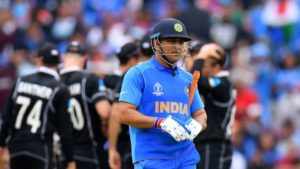
India was World No. 1 in both Tests and ODIs under him and it speaks a lot about the consistency that the man brought in this team.
There are many incidents of great importance where he played a crucial role in his career – never to forget the World Cup-winning shot – and a few of them are:
1. The double hundred that he scored against Australia. From an OK type score, India was able to score a daunting total due to the 9th Wicket Partnership between him and Bhuvaneswar Kumar of 140 runs. India won the match and re-established themselves as World Number 1 in Test Cricket.
2. The final over win against SriLanka at Port of Spain. India needed 15 to win in the last over with one wicket in hand. He won it for India single-handedly.
3. The Champion’s Trophy final against England – Everybody outside the ground thought that giving that over to Ishant Sharma was a mistake – England was going great guns – but as it turned out, Ishant took out both the set batsmen and from there India won a match from the claws of defeat.
4. Taking the gloves off as Hardik Pandya came into bowl against Bangladesh in the T20 World Cup. Bangladesh needed 1 to tie and 2 to win. The batsman missed and MSD after collecting the ball, didn’t throw down the stumps, and instead ran towards the stumps and broke them before the batman could make the ground.
5. Giving Joginder Sharma the last over in the T20 World Cup final – when logic said Harbhajan should be given. Rest as they say is history.
There are countless such incidents across his career.
A wicket-keeper (one of the finest – records speak for itself), a terrific batsman, and an added cherry – a great captain.
As a wicket-keeper, he holds the world record of 123 Stumpings. No other wicket-keeper has 100 stumpings under his name.
As a leader, he always believed that one should follow the process and enjoy the game – results will follow. He started the process of handing over the trophy to the youngest team member right after receiving it and that process has continued under Virat Kohli.
Some examples of his style of leadership:
1. Handing over the captainship duties to Sourav Ganguly in the last hour of Ganguly’s farewell test match.
2. Came in ahead of Yuvraj Singh in the 2011 World Cup final.
3. Right after the winning sixer in the 2011 World Cup final, made it a Sachin Tendulkar event thereafter.
4. Got the best out of Rohit Sharma by promoting him as an opener in ODIs.
5. Retired from Test Cricket to elongate his Limited Overs Career and was a pseudo captain in tough situations under Virat Kohli.
You will be missed, Mahi and I look forward to your IPL heroics this year and hopefully next year?
How will you remember MS Dhoni?
More than 15 years back in Bangalore, I had a colleague who was the go-to man for everything in the company. Though he was designated as a project manager he solved problems of many across departments. Then one fine day he resigned. We, who were close to him, knew that he was leaving for some personal reasons (nothing to do with the company) but quite naturally the company’s management tried to persuade him to stay back. Of course, it didn’t happen and he moved on.
As per Steve Jobs’ theory, he was an “A” Player of the company. Steve Jobs’ used to say that make sure to hire as many “A” players as possible because if you hire “B” players then invariably these “B” players will hire more “C” players and soon the whole business will become “average”. He used to say that it’s better to hire a small team of “A” players than having a gigantic team of “B” and “C” Players.
This brings us to Packard’s Law: No company can grow revenues consistently faster than its ability to get enough of the right people to implement that growth and still become a great company. – David Packard (Co-Founder of HP).
What has been your hiring strategy? Are you patiently building an “A” team or are you doing a quick fix by hiring a lot of “B” players?
A few days back, I was watching “Kuch Kuch Hota Hai” with my children. While watching the movie, I told my son about my experience when I first watched this movie way back in 1998.
I told him how I had to purchase the tickets from a blacker at Metro Cinema Hall. My teenaged son didn’t quite connect what I meant by “Blacker”. Then I explained to him how people used to sell movie tickets at 3X-4X prices outside the cinema halls.
He asked me a genuine question, what are those blackers doing these days?
Interesting question! Probably they have found a better job opportunity!
How things have changed in the last 2 decades! Today, the concept of buying tickets physically is no longer a necessity. Everything is available within an APP.
In the last 20 years, everything has moved from offline to online. Options to customers have increased and similarly, the buying cycle has also changed. Today we get more informed customers so the way we sell has also changed.
Has technology reduced jobs or enhanced jobs?
Has technology made us lazy or has it helped us to make informed decisions?
What do you think?