 Indian Premier League is upon us and the cricketing extravaganza will be on our TV sets in another 2 weeks’ time. Last year, the tournament got postponed due to the ongoing pandemic and it was held in the UAE in October. It was a highly successful tournament because we had many close matches and the teams were pretty much evenly matched. Going into the last week of the group matches, all teams other than Chennai Superkings had the opportunity to finish in the top 4. The team that finished last eventually, Rajasthan Royals had the same number of points as CSK and Punjab Kings. In fact, third place to 8th place was a difference of 2 points with the separator being the net run rate. Though it’s pretty difficult to expect a similar encore this time around, as fans we will be looking forward to some thrillers no doubt.
As a buildup to the marquee tournament which is being held across 5 venues in India, I will be doing a SWOT analysis of each of the 8 teams over the next few days. I will also predict the best playing XI of each of the teams. And of course, as the tournament starts, I will be penning down my analysis just like the previous year.
Today, we look at Rajasthan Royals.
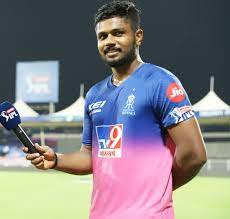
Rajasthan Royals were led by Steve Smith in 2020. But this year they let go of him and made Sanju Samson the captain of the team. It’s quite a bold decision but I guess they believe that Sanju can bring continuity to the team in the long run. He is young and had a great IPL last season so it’s a just reward. How he balances the act of captaining the side without letting his performance slip would be interesting to see.
Here is what I see as their best Playing XI:
Yashasvi Jaiswal
Jos Buttler
Sanju Samson
Ben Stokes
David Miller
Rayan Parag
Rahul Tewatia
Chris Morris
Shreyas Gopal
Jaidev Unadkat
Kartik Tyagi
SWOT analysis:
Strength: They have a very balanced team with a lot of batting and bowling options in their chosen playing XI. This kind of balance would mean that the top order can play with a lot of freedom and we all know how dangerous Jos Buttler, Sanju Samson, and Ben Stokes could be on their day. A very strong batting unit.
Weakness: Jofra Archer has pulled up injured and in all probability will miss the IPL. Without him, their bowling looks weak because he was one bowler who gave them a good start with the ball and came back at the death and picked up crucial wickets. The team doesn’t have big names when it comes to their bowling. Bowling is definitely their weakness. Another problem they have is with their bench. They have a good playing XI but if someone is injured or has a spate of bad performances they do not have like for like replacements across the board.
 Opportunity: The biggest opportunity is with Sanju Samson. He missed the bus with the Indian team because of a lack of consistency. With the captainship role, he has got full backing from the management and I hope he uses this confidence to bring in some consistency to his game. When he is in full flow he is terrific to watch. He needs to do it consistently. The Indian middle-order is filled with good players so for him to break through, he needs to have a very special tournament, and in that lies his and his team’s biggest opportunity. Another opportunity is for the rising star, Yashasvi Jaiswal. He couldn’t do much last year in the limited opportunities he got. I hope he lives up to the talent this year. Kartik Tyagi who was a part of the squad in Australia as the net bowler would have learned a lot over the past few months. I am excited to see how he performs this year in the IPL.
Threats: The team looks heavily dependent on Buttler and Stokes. Samson had been inconsistent in the previous editions and so too has been Miller. This put too much pressure on the English stars. Stokes has been playing non-stop cricket over the last few months across all the 3 formats and if he has a sudden dip in form it could be a real problem for the team. No proper batting backups could come back to hit Rajasthan Royals hard.
So this is what I think about the team of Rajasthan Royals. What do you think? What is your best XI for the team?
Do share your thoughts as I come back tomorrow with the SWOT analysis of Chennai Superkings!
Take care everyone and God Bless!
It was 20th March 2003 when I made my final shift from our flat in Hulimavu (Bangalore) to my newly rented flat in Kagadaspura. The world cup semi-finals were on with India playing Kenya. It was evening time when I left Hulimavu. I didn’t have a TV at my new flat and hence couldn’t follow the rest of the match. Thinking of today, you can say, I lived in the ice age after all today one can follow the match on the move via Cricinfo/cricbuzz or other streaming platforms. But that was 2003 and the India of 2003 was far different from the India of 2021. Internet penetration was not high and it was generally restricted to cyber cafes and offices those days. Smartphones were also not available. So though I wanted to see the match I couldn’t.
The reason I moved to a new place on the day of the world cup semifinals was that I was to get married the next day. Mine was a simple marriage against my parent’s wishes and took place in a temple. So on 21st March 2003, I tied the knot with Sushma and as I write this, we complete 18 years together. Quite a journey through thick and thin, which started in Bangalore and currently residing in Howrah!
A few years later in late 2006, I moved from Bangalore to Howrah (my ancestor’s place is in Howrah) because I got a job in Kolkata. One day while waiting for my bus near Webel More (sector V, Kolkata), I met my junior from college, Jahangir who was working at a nearby office in Sector V. We exchanged pleasantries, and then he put a call across to Asif, my roommate in Bangalore. Though I had been in touch with Asif when he was in Bangalore, I lost touch after 2003 when he shifted to Kolkata. Thanks to Jahangir, I got in touch with Asif again. A couple of weeks later, I visited his house and I met his wife, Sumbul for the first time. There I came to know that they got married in 2004 and hold your breath they got married exactly one year after me that is 21st March 2004.
Dates are lovely isn’t it – they always find a connection. So as I celebrate my 18th Marriage anniversary today with Sushma, Asif and Sumbul are celebrating their 17th. Happy Anniversary to them too.
A few years later, Me, Asif, and Mukesh opened a software firm, AMS Technologies. Just as it happens at startups we struggled but thankfully we survived. Around 2012 with business growing, we decided to convert our firm into a Private Limited Company. When we applied for the same, it was brought to our notice that we can’t get the name AMS Technologies because it was already taken by some company in Maharastra. It was big trouble for us because it meant, we now needed a new name and that meant a lot of logistical issues. But we had no choice and finally got ourselves registered as Brainium Information Technologies Pvt. Ltd.
Now, why am I telling this here which looks like a personal anniversary blogpost? Well, guess the date of registration of Brainium Information Technologies Pvt. Ltd? It was 21st March 2013.
How dates collide isn’t it?
3 different occasions in 3 different years all tightly knit on a common date – the 21st of March.
Grand Coincidence!
So a very happy anniversary to all Brainites across India! May we all shine and make a difference in all our lives and our clients’ lives. Let’s continue our digital transformation journey. Let’s progress towards making this country truly digital.
Take care everyone and God bless!
India always tends to play badly at the start of the series. This is something I observed over the years as a fan. This was particularly true when India went to tour the SENA nations (South Africa, England, New Zealand, and Australia). Multiple times India lost series 1-0 in test matches in these countries and when you check the record books, you will find that the first test match was lost. So it’s clear that India improves their performance dramatically over the series but the loss in the first match generally becomes the difference!
Right after IPL 2020, the Indian team travelled to Australia. The tour started with a 3 match ODI series. As was the norm Australia out batted India in the first match and it was repeated in the second match too. Within a span of 2 days the first series of the tour was lost. But as is the norm with India, they came back strongly winning the inconsequential third ODI, and took the momentum forward by winning the next two T20 matches to win the T20 series.
The Test series followed and India had one of the worst days in their cricketing history when they were bowled out for 36 runs to hand themselves an unforgettable loss of face. The critics were out with many ex-cricketers predicting a 4-0 loss for India. But as has been chronicled many times over, India changed the course of the series by winning 2 of the last 3 matches and drawing another. The critics were left searching for cover as India breached the Gabba for the first time in 32 years to win the series 2-1.
A come-from-behind series victory when everyone wrote them off showed the mental strength of this cricket team and a lot of credit must go to the coaching staff led by Ravi Shastri.
England was in India for a series of tests, T20s, and ODI matches. India was in a high after beating Australia in Australia. And once again a series started with England demolishing India by a big margin! The critics were out once again with Virat Kohli and Ajinkya Rahane facing a lot of wrath on social media for their failures. But as has been the norm in recent times, once again India came back strongly and won the next 3 matches to win the series 3-1.
A lot of talks went behind the back about the pitch conditions but as could be judged from the matches, England won tosses, batted first but still lost. The fact was that they struggled against the Indian spinners and the English spinners weren’t able to sustain continuous pressure on the Indian batsmen. The Indian tail which generally crumbled under pressure came up with superlative performances whenever things looked rosy for the opposition.
The T20 series followed next. England the current 50 over world champions and the top-ranked side in T20 cricket held all the aces. Their first XI was available and with the T20 World Cup to be staged later in India, it was perfect timing to let the world know why they are the favourites to win. India on the other hand was handicapped with many in their bowling unit not available. Bumrah was not available due to his marriage, while Shami and Jadeja both were yet to be fit due to injuries. Jadeja in particular helps India get a perfect balance due to his all-round abilities and his unavailability made a huge difference to the Indian side. Bhubaneswar Kumar was coming back after a few months due to his injury lay off. So for India, this tournament was more of seeing how the youngsters perform so that they could get their playing XI set up for the World T20.
I was unable to watch the first match due to an office get-together but followed it on Cricinfo. Some of my colleagues had their HOTSTAR streaming live but I quickly moved away from that because India was down 3 wickets before the power play overs were completed. To be very frank other than the audacious reverse flick sixer by Pant against Jofra archer there was not much to write home about. Before the start of the match, there were talks of Surya Kumar Yadav replacing Shreyas Iyer but it was Iyer who kept the innings together with his half-century. But India’s score of 124 runs would have never been enough and England won quite easy to take the lead in the 5 match series.
Once again a series started with India losing the first match pretty horribly but there was no reason to believe that India couldn’t come back strongly. The dew in the latter half of the first match made the toss very vital. Batting seemed easier in the second half. Of course, India was without some of their main bowlers and that affected the team performance too.
India rang in the changes in the second match. They handed debut caps to Ishan Kishan and Surya Kumar Yadav – two top performers in IPL for Mumbai Indians. India went in with a bowler short and it seemed a very risky strategy. Thankfully Virat won the toss and India had the opportunity to chase. The strategy of playing with 5 bowlers was too much of a risk when you are defending a total but with India batting second it looked relatively better. But then England had to be kept under 175 runs for team India to chase down. Indian bowlers rose to the occasion and especially in the middle overs they strangled the opposition with smart slower balls and the final momentum which is required in any T20 match went missing for England due to the loss of important wickets in the middle overs. The spinners struggled but the pacers bowled quite well to keep England within 165 runs.
India opened with Rahul and Kishan and though Rahul failed, Kishan didn’t show any nerves that are generally seen with a debutant. The IPL has been a great addition to the Indian cricket calendar and these new players having played against the top players in IPL had no qualms facing the English bowlers. Ishan Kishan showed great skills especially the pull shots and the front foot off drives. A debut half-century followed. Virat Kohli also got into the groove scoring a fluent half-century to take India home. It was great to see, Virat calling Kishan on stage to share his man of the match moment. After all, it was Kishan who wrestled the momentum for India in this match.
The third match followed a couple of days later. India lost the toss and the 5 bowler strategy had to backfire with India defending. Though Virat scored another fluent half-century, 156 runs was never enough to defend. With the dew making the spinners redundant and with no backup of bowlers, England won in a canter by 8 wickets. Butler made the Indian bowlers feel like club cricketers with his audacious hitting all around the wicket. The momentum was back with England and they looked all set to take the series.
Virat Kohli never had a good time at tosses and with the amount of dew we had in the matches, it was quite clear that the team batting second had a distinct advantage. There is a saying that you can do well only on things you can control and to be fair, the toss was never in control of anyone. It’s pure luck. So India had to do things in the cricketing field better, letting tosses not control their destiny.
The fourth match was a do-or-die situation for India. India lost the toss once again and just like in previous matches India had to bat first. They persisted with their 5 bowler theory which was a very risky strategy. First thing first though – India needed to bat well. Taking dew into consideration the minimum that India needed to score was 180. Anything below that was advantageous for England. One of the reasons that India went with such a big batting lineup was for the team to play fearless cricket. If you play to save wickets it won’t help the cause so the ideal strategy was to go after the bowling from the word go. That’s how India started this time around with Rohit hitting a sixer off Adil Rashid in the very first ball. Though he perished the next over, Surya Kumar Yadav pulled the first ball nonchalantly for a six. He continued in the same zest and only a controversial catch got him out. He of course crossed the half-century mark before that. The England pace bowlers especially, Mark Wood and Jofra Archer bowled very well but the other bowlers were taken for plenty with Pant and Iyer giving a big impetus to the Indian score at the fag end. India finished at 185 runs which was just above par in Ahmedabad.
India needed to bowl well because dew made the spinners a lottery. India had two of them. Though India started well picking up Butler and Malan quickly, the England middle-order batsmen especially Ben Stokes brought them back into the game. The Indian spinners were taken for plenty but Shardul Thakur in the space of two balls picked up both Stokes and Morgan to bring India back into the game. Shardul Thakur always has this happy knack of picking up wickets and that day his over changes the complexion of the match. He tends to go for a lot of runs but his smart usage of slower ball variations gets his wickets and it was no different that day too. India was able to win defending a total and that too with only 5 bowlers at their disposal. Hardik Pandya’s bowling effort of 2/16 in 4 overs was very handy for the Indian team.
With the series hanging in the balance it was all to play for in Ahmedabad yesterday. India finally decided to take the extra bowler in the decider sacrificing KL Rahul who till then had been having a very ordinary series with the bat. How things change over a period of a couple of months. From being India’s first-choice opener and wicket-keeper he finds himself out of the team. Rishabh Pant’s spectacular rise in the last few months has been the chief reason for the same.
India once again lost the toss and they decided to make a smart change up in the order with Virat opening with Rohit Sharma. You will hardly find a series in the last few years where Rohit has had a quiet series. He had to play a defining knock and he chose the series decider to do that. Each of the bowlers was given the same treatment as Virat Kohli looked on from the other end. Rohit is in all probability world’s best executioner of the pull shot and there were plenty on display yesterday. When Rohit is on song it’s always difficult to keep the scoreboard stagnant and though he got out in the 9th over there was no let-up in the intensity from the Indian side. In the earlier match, Surya Kumar Yadav hit the first ball for six, here he hit the second ball for a six. Virat was also in full flow and when a superlative effort from Jordan brought the end of Surya Kumar Yadav, it was Hardik Pandya of hold who took the English bowlers to the cleaners. If 180 was the par score then this match was as good as over because India ended up scoring 224 runs.
Dawid Malan is the world’s top T20 batsman but his performance in the last 4 matches was nowhere near to the potential he possessed. But like Rohit, he took the final match to show his class. He along with Buttler made the Indian bowling attack pedestrian. The addition of an extra bowler helped though because without Natarajan it would have been a very sorry day for Washington Sundar. After all, Buttler was in some mood yesterday.
T20 is a batsman’s game and in a high-scoring encounter if there is a bowler who keeps the runs in check makes the difference between both the teams. Bhuvi was the man for India yesterday. His third over of the match wherein he sent back Jos Buttler changed the complexion of the match. Shardul Thakur followed Bhuvi by picking up Malan in the next over. The asking rate kept climbing up and though the England lower order hit some lusty blows at the end the match was as good as over. India won by a pretty comfortable margin of 36 runs. In a match where over 400 runs were scored, Bhuvi returned figures of 2/16 in his 4 overs – the real differentiator between the two teams.
A series that started with India scoring 124 runs ended with them scoring 224 runs and the margin of victory 36 runs brought back the memories of Adelaide where the Indian team was bowled out for 36. Sometimes ” 36 ” is not that bad a number after all.
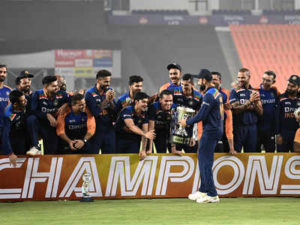
Another series in which India started on the wrong foot ended with them lifting the series. Coming from the back and winning these important matches has now become a habit for this team. But it all starts in the mind. When the mind is clear and the spirit is high you can do unthinkable things. It’s the positive mentality- it’s the winning mentality that spurs few individuals to go above their means to establish wonderful things and this Indian team has shown the world just that. What if the best XI is not available- it doesn’t matter because each individual believes in his ability to back their strengths and make a difference to the team.
This is how winning teams are built. It’s a team game and each individual contributes towards the team goal. Kudos to this spirit and I hope India continues to grow in strength because two very important occasions are coming up this year – the WTC finals in June and the WT20 in October. I hope India wins both. The country is waiting.
As an organisation you will grow only if you are ready to build a team properly. This is a time taking activity because you can’t build a strong and excellent team overnight. It can take up to 3 years to develop such a team. And once you reach that goal, you need to ensure that it continues to grow in the same manner.
There will be a lot of short-term pains which you need to overcome in the process but what you need to see is that are you progressing in the right direction. As the CEO of the company, you need to focus on the results and you should compare how things are progressing on a quarter-to-quarter basis.
To ensure that your vision is aligned with your employees it’s important to build a good team. But if you are for example a company with 200 employees then your vision might not get properly transmuted right down the ladder. Hence you must build teams within your organisation.
Now how do we go about building our teams?
Here are a few points which I suggest on this topic of Team Building.
1. Team of 10
I have seen multiple times that organisations create a Team Leader or a Manager and put 20-25 or more people under one person. This is a catastrophe. A person can’t manage more than 10 people at a time. And to be honest even 10 could be exasperating at times if you do not have a proper culture ingrained in your system. And this 10 member team includes the manager too because finally, the manager works for the team, not the other way round. So for starters have a manager against 9 team members. Anything more than 9 and your manager will be completely stressed and you will find the overall team performance to fall too. So get the basics right, do not have more than 9 members under one manager.
Remember, managing a team is very stressful because you not only have to look at the client deadlines or sales/revenue targets but also team dynamics which includes great camaraderie among teammates and a culture of doing and getting better each day. All these activities need time and as a manager, you need to spend time with your individual teammates too because when your team members are happy, their output will be good.
2. Gender Equality
I know it’s difficult to have a 50-50 situation but you gotta try and get it as close as possible. As said above you need to have no more than 10 members in a team inclusive of the manager. Now see to it if you can have 4-5 ladies in a particular team. If the manager is a lady then try to get 3 team members who are females. This is very vital. Teams perform better which has an equal distribution of males and females. Having one or 2 female members in a 10 member team is not good because then biases come in and we in India are yet to get over certain biases. But to make it a great performing team you should look at this diversification because there are many things like compassion, empathy, patience which are much stronger in ladies than in gents. So get this right and you will see better results.
3. 20% Juniors in each team
So now that you have a 10 member team (9 members and 1 manager), see to it that out of this group of 10 people, 2 are juniors. Now, these 2 members can be freshers straight out of college or maybe having 1 year of experience in the industry. Hiring juniors is very important for any organisation to grow in the long term. Short-term thinkers do the mistake of not hiring freshers but that’s a very wrong strategy. When you hire freshers or employees with 1 year of experience it helps the team to be more energetic. Young people have more energy and their perspective on life is a lot different than someone who has been in the industry for 7-8 years or more. When you have energy and enthusiasm, you attract positivity and when you attract positivity, positive results follow. These youngsters though may take time as far as learning new skills is concerned but if the attitude is right, he or she will learn them pretty fast.
Of course, the hiring strategy should be right. Too much time is spent in understanding how good these people are in core skills and how much they score in aptitude tests but ideally do psychometric tests and understand how good are they in their attitude. Are they energetic? Are they willing to learn new things? What is their ambition? Have there been any goals which this candidate had as a teenager and how far has he or she gone to achieve that? How is their communication skill? Do they smile and throw positive vibes during the interview?
These are the things that you need to look at while hiring freshers and when you get the right candidate with the right attitude hire them and induct them into your team. Remember skills can be taught, attitude can’t. Having a good diversification of junior team members will change your team’s dynamics, they will get more energetic because energy will transmute from these youngsters to the senior people and together they will make a lovely team and together they will work towards the team goal.
4. Leadership from anywhere
This is where your role as a CEO becomes very vital. You need to build a culture of transparency. Just having an open-door policy might not help if you do not listen to what’s being said and if you do not take action based on feedback received. I have seen in my experience that many junior employees have great leadership skills right from the initial days. These are the future stars of your team and you should have a healthy work culture so that anyone, be it of which designation can come forward and give their idea for the betterment of the company.
These people should be lauded because then they will get the required confidence to come forward more often with better ideas which would, in turn, help the team.
Just because I am not a designated leader so I will keep quiet – this attitude destroys the company’s culture because it means that the person’s heart is not in the job. If I am working in a company I should always care about the company and I should be openly suggesting what is good for the team. The designation should not stop me from giving my point of view.
When you implement such a culture in your organisation then any person within a particular team won’t be bogged down from taking any decision which he or she thinks is for the betterment of the company or the client. Finally, the heart should be in the right place and the team members should think only about client satisfaction which in turn would improve the company’s brand equity. Leadership should never be based on the designation. Spread this noise across the company that anyone is a leader as long as he or she takes care of the company’s goals. A team member should not be selfish looking only at his or her personal goals – when that happens the team will fail and subsequently the company will fail.
5. Captain and Vice-captain
In my first point, I discussed having one manager for every 10 member team. I also discussed why more than 10 would disturb the equilibrium. Here I am adding another point and that is having an Assistant Manager within the team. This person will not only be the supervisor on days the manager is off but will also help the junior team members. As you remember we discussed having at least 2 junior members in each team and these junior members would need good handholding and training in the initial days. The manager is already busy with a lot of other activities with the rest of the team so here the Assistant Manager works as a guide to these new team members. The Assistant Manager whom I have christened as the vice-captain not only works as part of the team just like a senior member of the team but this additional responsibility of helping the juniors works as an internship for his or her future roles when he or she get promoted to being a full-fledged manager. So you can say it will work as testing waters for future managers.
6. Knowledge & Mistakes
As a team one should build a culture of sharing knowledge. This is very vital for a company to grow. When a team member gains some new knowledge that helps in solving a critical problem, it’s very important that the knowledge is shared so that in the future if someone else faces a similar problem he or she will know what has to be done. This also makes the team member happy because he or she gets the required accolades in front of colleagues which works as a boost for them and they will be further motivated to do better.
Mistakes happen. We are humans and mistakes can happen but one should build a culture of learning from mistakes. When you do not show anger when a mistake happens but in that place you sit with that person and make her understand the mistake and try to understand why the mistake was triggered, then your team member will feel far better and will try and see to it that such future mistakes don’t happen. Secondly, owning up to mistakes starts right from the top. If you do a mistake, it’s best that as a manager you own it up in front of your team. This will ensure that your team members will give more respect to you and they will be able to overcome their fear of hiding or being defensive when doing any mistakes. Accepting mistakes is very tough to do but when you do that, you will realise that it’s a great relief pill. Never be defensive when you are pointed to a mistake. Never give excuses. Own up because then only you will learn and get better.
7. Guidelines
Each company has its own processes based on which the company runs. But what’s very vital is to let your team members know that any process is a guideline and team members can customise based on the situation. We are humans, not horses so adapt to situations and take decisions based on what is best for the organisation. Do not treat processes like “Laxman Rekha” that can’t be breached – rather make it like ‘Traffic Yellow Lines” which can be breached once in a while if the situation demands so but only if it makes a difference to the client satisfaction. Client satisfaction improves brand equity so this is something all team members should be made aware of.
Too many times I have seen that people follow processes without thinking that it might harm a client’s goal. Sit back and think if that’s the case and make changes based on the situation. As said earlier this depends a lot on company transparency. If you allow a culture where if a process is breached she will get negative points then that person will not think about the client and will rather think about the process. In the meanwhile, because of this, the client will suffer and your company’s brand image will suffer. So be very careful when you roll out any process because what you say when you roll out the process is how your process will be perceived by the team members. Keep an open frame of mind and always inform the teams that the processes are being rolled out to help us work in a more cohesive manner which in turn would help our clients to be served better. Customer satisfaction is what we are all aiming for so when you clear the air that it’s an important goal to achieve the team members will understand and when you walk the talk people will realise that they can follow the guidelines without being too frightened about it.
8. Targets
We are in business and business means selling something for a profit. When there is no profit then there is no business because after a while the business will close down because there won’t be any money to run the show. Hence, it’s very important to have short-term and long-term targets. Quite clearly in my experience, I have found that other than the managers most do not feel comfortable working on targets. This amazes me a bit because finally each one of us has some targets (goals) in our lives and we all are walking towards them. So when you are working in a business why will you shy away from it?
I understand it’s because of communication. Company management does not transparently share all the company data with their employees. This culture of hiding things then gets seeped into the team and after a few years, small matters also start to get hidden. I think management should be open and they should openly discuss their financials with the team members. This procedure helps the team members feel good because then they feel cared for. Just like money management should be taught at home from a young age, similarly, a company’s finances should be discussed openly with your teammates. This makes the employees feel more important and then you do not need to give them the target for the next quarter or the next year – you will find your team members coming back to you with the numbers themselves.
Of course, production people might not give you the sales targets but they can always inform you that they will finish this project within this time and get it delivered and that’s more than enough because when the product gets delivered, the customer is happy and the company gets paid. This is the positive effect of being transparent is. Rather than hiding stuff, open up, and then you do not need to give the targets, the team members themselves will create their own targets which when added together will help the company reach its goals.
9. Celebrate wins
Generally, all companies celebrate once or twice a year on some grand occasions. But, here I want the teams to celebrate small wins. Supposedly a team has completed a project much ahead of the deadline, allow the manager to have a budget every quarter which he or she can use to celebrate the occasion. Here the manager’s reporting head should also join the celebrations. We are all humans and we are social animals. When we see the boss’s boss celebrating with you, you feel elated and you get super motivated the next day. When you celebrate do not talk about business, talk more about family, friendships, and joyfulness. That’s what will motivate the team further. People forget to celebrate small wins thinking that too many celebrations are bad for health. Actually, it’s not. When you celebrate, you enjoy, you laugh, you improve camaraderie and that helps in attaining your future goals. Your employees’ should believe that you care, your team members should believe that their manager cares and when you celebrate small wins and do that consistently, they know that you are loved and respected in this place and their loyalty improves. When they treat the company as their own company, you need not push for results because the team members will push each other to get the results.
Finally, the company will win.
So these are my points which I think helps in building a great team. Do you think I have missed any? Do you think it’s something very radical – any of the points? Do you think it’s already happening in every company?
Do share your thoughts and views because when all companies start following this, the world will be a better place to work at. Let’s remove toxic culture from the companies. Let everyone thrive. Let all companies thrive. Let India thrive and Let the world thrive.
Till we meet again, Au Revoir!
England, the reigning world champions in 50 overs cricket has set her eyes strongly on winning the T20 world cup too. That’s their clear-cut priority and they make no fuss about it.
In the recently concluded Test series, one could see the rotation policy of the England cricket team with each match having 3-4 changes. Come the T20 series and you will see there won’t be any chopping and changing in their lineup.
This England team over the last 3-4 years under Eoin Morgan has built an awe-inspiring white-ball cricket team. Every team makes a sedate start to a match once in a while but not the English team because they believe in slam-bang cricket from the word go. The advantage of having a lot of all-rounders has helped their cause a lot in this regard.
England has brought their best side for the T20 series which starts on 12th March while India has some injuries amongst their ranks. Bumrah has been rested and Shami and Jadeja are yet to be 100% fit but this doesn’t make India a weak team because India has a huge backup of fringe players who are yearning to get their opportunities.
Quite a few new-comers have been selected in this series namely, Surya Kumar Yadav, Ishan Kishan, Varun Chakravarthy, and Rahul Tewatia. I am not sure how many of them would get a chance in the playing XI with Rishabh Pant coming back and is sure to make the playing XI.
This is a good time, I thought to analyse what would be India’s best playing XI for the first T20 international to be played at the Narendra Modi Stadium in Ahmedabad on Friday.
The Openers
Rohit Sharma & KL Rahul
This is India’s best opening pair for T20 cricket. Let’s not make any fuss about this because these 2 players can tear away any bowling attack on their day. The advantage of having Rahul opening the innings would help India’s cause of getting a quick start. Rahul gets off the block very quickly and could be a great foil to Rohit Sharma who takes a bit of time to get going.
Virat Kohli
The captain and India’s permanent number three for white-ball cricket comes in next. Virat has been a bit out of form by his high standards having not scoring any international century in the last 16 months but I am sure he will come back strong because I believe it’s just a lull before the storm. He is yet to score an international T20 hundred and who knows he might break that jinx in this series.
Shreyas Iyer
Shreyas Iyer keeps his spot at number 4 because India needs to give a consistent run in that position. This number 4 spot was the reason for a lot of debates before and after the cricket world cup of 2019 and hence it makes sense to have some regularity in this spot. Iyer in the last couple of years has shown consistency in that spot and though his shot selection against the rising deliveries is still questionable but with the world cup being held in India, I don’t think it would be of any problem for him. He is a terrific player of spin bowling and one could be very sure that 8-10 overs of spin every team will throw at the opposition and Iyer could become a very important player by holding on to the number 4 spot.
Rishabh Pant
By sheer performance, Rishabh Pant comes back to the side. His wicket-keeping showed tremendous improvement over the last 4 test matches and his batting just went up a notch in the last couple of months. He brings in power in the middle order who could destroy any attack on his given day. I think he would be the X-Factor in the T20 world cup.
Hardik Pandya
Though I am not sure if he is bowling ready yet but just for his power-hitting skills he makes it to the playing XI. In the last couple of matches in Australia where India won the T20 series, he showed his class and I am very sure he will give a lot of joy to India in the days to come. He is one player who can transform a match in one or two overs with his lusty blows. If he is fit to bowl then it’s even better. A couple of overs from him would definitely help Virat Kohli especially if one of the main bowlers go for a few runs.
Axar Patel
With Ravindra Jadeja not playing due to injury, Axar Patel gets a long run in his place. After his heroics in the recently concluded test series, you can’t keep him out of the playing XI, can you? This of course means that Washington Sundar missing out but then that’s the problem India has right now with too many good players around. He is no mug with the bat too though not in the league of Ravindra Jadeja who is once in a generation cricketer.
Shardul Thakur
As a bowler, he can blow hot and cold due to his inconsistency in line and length but he has the happy knack of picking wickets. In T20 cricket one thing is for sure that the best way to keep the opposition down is by picking up regular wickets and Thakur becomes very effective in that. His batting skills are good too as he showed in the Brisbane Test match and his inclusion in the playing XI bolsters India’s batting strength. With a longish batting line up the top order could play with more freedom which is very much required in today’s T20 brand of cricket.
Bhuvaneswar Kumar
Bhuvi makes his comeback after a long layoff due to injury. He gets into the XI without any trouble because he is one bowler who can swing the ball both ways at the start and has the ability to bowl yorkers and slower deliveries at the death. With Bumrah not available for the series his performance would be vital for India to make a mark. He is a bowling all-rounder too so provide additional cushion to the Indian batting lineup.
Deepak Chahar
Natarajan who was a definite starter has got injured and is likely to miss the whole series. This opens up a spot for Deepak Chahar. Chahar made the most of his opportunity when he got his chance during Bhuvi’s injury but he has been lacking consistency nowadays. There is a possibility that he couldn’t adjust to the Australian conditions well after a long IPL but he needs to get his act together in this series because when Bumrah and Shami get back to the team he will find himself outside. He is in a similar mold to Bhuvaneswar Kumar so ideally, he should bowl out within the first 8-10 overs. His death bowling is not so good and this could hurt India. There is a chance of India playing Washington Sundar in place of him which of course depends a lot on the pitch and the conditions.
Yuzvendra Chahal
Wrist Spinners make a big difference to any team in white-ball cricket and more so in T20. Chahal has been on his own league throughout the season. Though Kuldeep has lost his mojo, Chahal has been able to keep his place intact due to his knack for picking up wickets. As a leg spinner, he is an attacking option for Kohli and is expected to pick up wickets in the middle overs so that the English power hitters do not run away with the match.
So this according to me is the best playing XI for India come 12th March.
What do you think? Any alternatives or contrarian views?
Do write in. Happy to engage with fellow 12th Man!
Take care guys! God bless!
With a foot in the door as far as the WTC final qualification was concerned, India needed to guard against any kind of consistency when they met England for the final test match in Ahmedabad last week. England was already out of the equation and India needed a draw to go through. But you can’t play for a draw in a cricket match, can you? These days all matches are generally result-oriented and as was seen in the first three matches in this series it was highly unlikely for a draw to happen.
India on their part made the right noises before the start of the test match because the team excluded confidence of beating England 3-1. England was mentally down especially after getting beaten within 2 days in the third test match.
The toss was important I felt because batting first in India had its own special advantages. Unfortunately for India that didn’t happen but the surprise came from the English camp. In the third test match, they went with 3 pace bowlers which were heavily criticised, and to compensate for that they added cushion in their batting order. Going in with 7 frontline batsmen plus a wicketkeeper was a very defensive move but when a team got bowled out so cheaply in the previous test it was not an unexpected call, was it?
When England won the toss and decided to bat first, it looked like a very good toss to win. The pitch looked firm and there was no seam movement and neither was there any spin happening too. But as they say, quite rightly, the game is played in the mind. Axar Patel had taken over the English batsmen’s minds and he struck right away by picking up 2 wickets. Both the wickets had nothing to do with the pitch but as I said earlier, the game is played in the mind and the English batsmen were having nightmares facing Axar Patel. As an added bonus Md. Siraj picked up the wicket of the dangerman, Joe Root with a sharp incoming delivery.
The pitch didn’t give much help to the spinners and hence Kohli continued using pace from one end and India’s one of the brightest stars in recent times, Md. Siraj got the all-important wicket of Root to peg England back. The win-toss & win-match syndrome died a quick death right at that moment.
England though had enough cushion in the batting lineup and I expected them not to be rolled over very quickly. But they failed to deceive. Ben Stokes looked solid and was playing aggressively but once he got out the tail didn’t wag for long. In hindsight, the extra batsman theory worked for England to an extent because the 7th batsman, Dan Lawrence scored a fluent 46 runs and if he had not scored that many, England would have struggled to cross 180 runs. In the final analysis, it didn’t count much because England folded up for 205 runs only.
India had an hour to negotiate on Day 1 but Shubhman Gill failed once again getting out for a duck. Here was one of India’s most talented youngsters on whom we had so much hope but he kept failing throughout the series. His weakness against incoming deliveries was well exploited by the English pace bowlers. Rohit Sharma and Chetashwar Pujara safely took India to stumps without further damage.
Day 2 was supposed to be India’s day. The pitch was good and all analysis pointed to a big Indian score. But India’s batting performance right through the season had not been a good one especially when you consider the top order. It came back to haunt India in this Test match too because India struggled to get going. Yes, England bowled very tight lines but Pujara in particular was unable to rotate the strike over. The run rate was going at 1 run per over for most of the first hour. And as what happens with this kind of batting when a wicket falls it adds pressure to the team. And in Indian conditions, one wicket brings two and sometimes three and that’s exactly what happened as Pujara and Kohli falling in quick succession. It has been a very strange performance from Virat Kohli over the last few months. A man who was dishing out centuries as if playing in his backyard had gone century-less for more than 15 months now. I do not even remember when was the last time Virat Kohli got 2 ducks in the same series. Failure of Kohli meant additional pressure on Rohit especially because Rahane was also not in form.
The pressure applied by the English bowlers got them due results. It was extremely heartening to see Ben Stokes bowl. Here was a man who was not 100% fit but was up and running bowling 6-7 overs in a trot. The rewards were great too and India suddenly found itself at 121/5. Getting a sizeable lead was now feeling like a dream and the only hope was that the lower order would stick around so that India could come close to the English total.
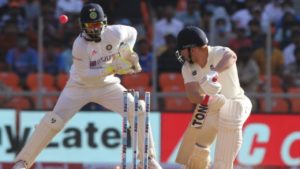
One advantage that India had was their lower middle-order batting strength. Ashwin stuck around with Rishabh Pant for a while but when he got out it was left to Pant and Sundar to take India forward. Washington Sundar in his brief career had already shown that he was as good as a top-order batsman and that’s how he showed up in Ahmedabad that day. Rishabh Pant on his part cut out the risky strokes and together with Sundar started building a solid partnership. As slowly and surely India loved closer to 205, I was keeping an eye on the new ball. I had a feeling that with both the batsmen set, the new ball would work in India’s favour. The script worked exactly like that and in the first 3-4 overs with the new ball India scored 6 boundaries all across the wicket but none as audacious as the one Pant hit against Anderson – a reverse swat for four over the slip cordon. I doubt if any batsman in the world had ever hit Anderson for a four like that in test cricket. But then that’s Rishabh Pant. He will hit you if he thinks he will hit you. He is the kind of batsman who won’t play defensively with an approaching milestone. He had missed quite a few centuries because of this and here also he went for a big shot while on 94 but the difference was that it went over the ropes. It was one of the best counter-attacking knocks ever played by an Indian. The situation was grave for India when he came to bat but he played a mature knock to take India towards safety. Unfortunately, he got out after scoring the hundred but India had Axar Patel coming in at number 9 who was no mug with the bat either.
Washington Sundar brought up the third half-century of his career shortly thereafter and he along with Axar Patel took India to stumps with the team leading by 89 runs. The margin was already a big one and another hour of batting on day 3 would mean the end of England’s fight. That’s exactly how it panned out and England looked jaded as Washington Sundar looked well set for his first test century.
Then a moment of madness saw Axar Patel getting run out and suddenly India’s tail was exposed. It was not that India didn’t have enough runs because the lead had crossed 160 runs by then but it was about Washington Sundar’s century as he was batting on 96 runs.
Test centuries were tough to come by and as Ishant Sharma took strike, I just hoped that he bats out the over. But he got out the first ball to an absolute straight delivery from Ben Stokes. Md. Siraj was the last man in and went for an old-fashioned hoike not coming in the line of the delivery to get bowled and thereby leaving Washington Sundar stranded on 96 runs. Sundar’s expression didn’t divulge much but inside I am sure he must have been highly disappointed.
The lead of 160 runs for India was a very big one and I predicted a finish that day itself. Many of my friends didn’t agree because the pitch after all was not that bad to bat on.
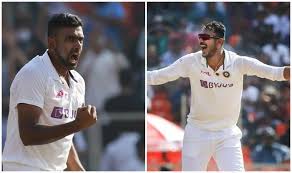
In less than an hour, I was about to be proved right as England lost 4 wickets with only 30 runs on the board. Once again it was Dan Lawrence who looked most accomplished amongst the English batsmen and raged a lone battle but it was just lingering the inevitable. England was bowled out for 135 runs giving India victory by an innings and 25 runs. It was a spinners’ day out once again as Axar and Ashwin shared the 10 wickets equally.
It was a dream series for Axar Patel who picked up 28 wickets in the series. Rishabh Pant rightly picked up the man of the match award because his century was the turning point of the match as Ashwin got the man of the series award.
A series that started so well for England ended with them losing 3-1 and as I keep saying this often, morning doesn’t show the day all the time.
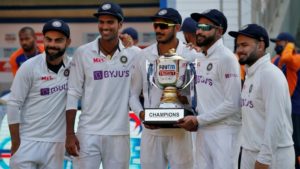
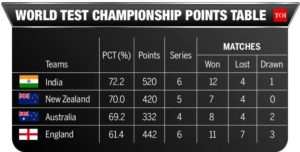
India ended the WTC league phase at top of the table and won the rights to play New Zealand in the finals to be played at Southampton later in June 2021.
It had been a great few months for the Indian cricket fans (whom I call the 12th Man of Indian cricket) and as I end the chapter here, I am yearning for the next few months to pass because a big Engish summer awaits us. I hope by that time Shami and Jadeja would be 100% fit and we will be ready to put it across England in their home conditions.
Till that time, stay well and keep smiling!
Winning the second test match got India back on track as far as qualifying for the WTC finals was concerned. On the other side for England, it meant they had to win both the third and fourth test matches to qualify.
Before the start of the series, the third test was the match which India eyed with trepidation. Mainly because of England’s superior swing bowling options. In the only Day-Night test match held in India previously (Against Bangladesh in Eden Gardens in 2019), the pace bowlers got 19 wickets and there was the chance of heavy dew in Ahmedabad too after 8.30 PM thus negating India’s spin bowling resources.
There was a lot of talk about the stadium and the pitch before the start of the match. It was a historic occasion because the newly built stadium in Ahmedabad was the world’s second-largest stadium (across all sports/countries). The stadium looked grandeur and it was indeed a proud moment for India. The pitch was always expected to be under scrutiny especially after the turner that was dished out in Chennai. Once again it was expected to turn but then how much turn was the big question and would dew negate the spinners in the latter half of the day?
England and the Indian team management seemed to have read the pitch differently. Because where England started with 3 frontline pace bowlers, India started with 3 frontline spin bowlers. It was opposite of each other and at the start of the match when I was chatting with my friends I told them that someone has read the pitch pretty wrong.
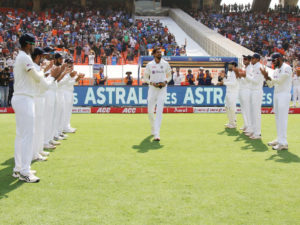
Joe Root won a very important toss and quite expectedly decided to bat first. It was Ishant Sharma’s 100th Test match. Ishant Sharma entered with a bang in 2008 (who can forget that spell in Perth?) but his career progression didn’t follow the upward trajectory as it was expected after that initial burst in Australia. But over the last 3-4 years, he came back strongly and has now become an automatic choice in the Indian playing XI. Playing 100 test matches as a pace bowler for India is no mean achievement and no wonder he is the second man after Kapil Dev to reach this coveted milestone.
The Indian team gave him a guard of honour as they took the field on Day 1 of the Test Match.
Ishant Sharma started the proceedings for India and he provided the first breakthrough too. Incidentally, as things panned out, this was the only wicket that an Indian pace bowler took in the whole Test match. I guess, England got it all wrong with their team selection.
The spinners were brought in within the first half an hour and Axar Patel got rid of Johnny Bairstow pretty immediately to put England on the backfoot. Zak Crawley was playing some delightful strokes though and with the ever-reliant Joe Root for company, England slowly but surely got back into the groove.
With 15 minutes to go for lunch, Ashwin from round the wicket, got a ball to straighten and Root failed to read the length, played on the backfoot waiting for the turn and got hit on the pad right in front of the wicket. That wicket shifted the momentum completely because Zak Crawley who till then was playing so well and scored a delightful half-century failed to pick up a straight ball from Axar Paten and lost his wicket. In a matter of few minutes, England fell from 74/2 to 80/4.
The advantage of winning the toss was frittered away as it was India who looked to be in the ascendency when the teams broke for the tea break.
It felt a bit weird to think that the first break on a day was a Tea Break because generally it’s a lunch break for 40 minutes but then this was a day-night encounter with the match starting at 2.30 PM. The players were back after the break but the break did more harm to England than to India because right after the break Ollie Pope and Ben Stokes got out leaving England tottering at 81/6.
When the series started it was a known fact that for India to do well, they needed to get Root and Stokes early. It didn’t happen in the first test and India suffered but after that first innings in Chennai, it became a night made for Stokes as Ashwin made him his bunny. There is a reason why Ashwin is the world record holder for dismissing the maximum number of left-handers in world cricket and Stokes’ problem against Ashwin just amplifies that fact.
Olly Pope came to India with a lot of hope but that didn’t translate into runs. His was a painful stay in Ahmedabad as he was neither able to judge the length nor the line. He was a sitting duck throughout his stay in the crease and the inevitable had to happen.
Once the top order was back in the hut it was just a matter of time for India to wrap up the tail. England finished at 112 to register their lowest total against India. Axar Patel with 6 wickets was the wrecker in chief. The lights were hardly on and India was out batting.
There were a lot of jokes running around twitter pointing out that the English pace bowlers wanted to bowl at the Indian batsmen under lights and that’s the reason why the team got out before sunset. Jokes aside, it was a horrible bit of batting from England. It was a wicket where one needed to apply himself and it was more in the mind than anything else.
When the Indians came into bat, the pressure was less because England had scored way too less but Gill and Pujara got out quickly and it was left to Rohit and Virat to resurrect the innings. They went about their duty very calmly and India looked well set to close the day with only 2 wickets down. One of the problems with today’s batsmen is that patience is no longer the virtue thanks to slam-bang cricket. It was this specific reason which brought about the downfall of Virat Kohli minutes before stumps. He tried to cut a ball that was too close to his body and he played on. That wicket made a lot of difference because, at that time, England just hoped for a wicket and India was in full control.
The next day we got to understand the difference that wicket made because one after another Indian batsmen went back to the pavilion. Joe Root looking at the amount of turn that Leech was getting got himself to bowl and he picked up 3 wickets for virtually nothing. From 114/3 India slumped to 125/8. India took a lead but it was very minuscule. India finally got bowled out for 145 runs with a lead of only 33 runs. Joe Root was the destructor in chief picking up 5 wickets for 8 runs. Amazing figures for the English captain and it showed how much the pitch was playing in the batsmen’s mind.
How much would that lead matter? Or was this a second innings shoot-out was what was going in my mind when England started their second innings. A peach of a delivery from Axar Patel got rid of the first innings half-centurian, Zak Crawley on the very first ball. The stage was set for another encore for the man from Gujarat. In the very same over he got Braistow bowled too.
Joe Root and Ben Stokes held the innings together for a while and as soon as India got the better of them, it was game over for England. They could last only 30 overs and got bowled out for 81 runs only.
India needed 49 runs to win and I was thinking what more twist was remaining to be seen. But the English bowlers had almost given up and when the Indian openers came out to bat they were extremely positive. Some lofted drives and straight sixes greeted the English spinners and India was able to rattle off the required 49 runs in 7 overs only.
A 10 wicket victory within 2 days brought India to the cusp of the WTC finals. Lots were written about the pitch but the fact was that both the batting teams struggled to pick the pink ball and the pitch though not a minefield, played tricks with the batsmen’s mind. As Gavaskar said in the commentary, it’s all in the mind.
As it turned out it was the shortest game of Test cricket that was ever played in the world after world war 2. Only 842 balls were bowled and the much-touted day-night match hardly became one because 2 full nights of cricket were not witnessed.
Axar Patel continued his dream run in Test cricket picking up 11 wickets in the match and quite rightly bagging the man of the match award. India’s failure with the bat was somehow covered up with the excellent bowling performance by the spinners.
With 2-1 up, India had the momentum to take them through to the WTC finals and the loss ensured that England was thrown out of the championship.
The 4th Test match was a day match but the question on everyone’s mind was how would the pitch play. But then that’s for another day as India enjoyed their day under lights which took them to the top of the WTC table. A draw in the next test match was enough for them to seize the spot but no one plays for a draw these days, isn’t it?
I will come back once again to write about how things transpired in the 4th test match. Till then, Au Revoir!
Before the start of the second test match in Chennai, the raving discussion amongst us was about the toss. India couldn’t afford to lose another match in the series and batting first was the way to go. Of course one needed to bat well and that is something that depended on the top order. The Indian top-order has been flattering to deceive for months now so it was a case of big concern.
England was expected to make a few changes because of their rotation policy which had been put in place to allow all the players adequate rest due to a long cricket season. Some of the changes were forced ones too. In all, they made 4 changes to their winning line-up.
James Anderson was replaced by Stuart Broad.
Dom Bess was replaced by Moeen Ali.
Jos Buttler was replaced by Ben Foakes
and
Jofra Archer was replaced by Olly Stone.
Another addition to this test was the crowd. The first test match was played without any spectators and whoever has seen cricket in India will know very well that the spectators bring in a lot of energy in the ground and most importantly it helps the home team’s morale too. All teams have a designated 12th Man but the real 12th Man is the crowd that fills up the Indian stadiums because it acts as a vocal tonic for the home team and adds to the pressure on the away team. I felt India missed the crowd in the first match and somehow the home advantage was missing. By the way, did you check out the book named, The 12th Man yet? If not go ahead and get your copy from Amazon or Flipkart today to understand why the 12th man plays such a vital role in the Indian cricket phenomenon.
Virat Kohli won the toss and quite expectedly decided to bat first. The pitch looked like a spinner’s paradise and quite expectedly India made a few changes too.
Shahbaz Nadeem was replaced by Axar Patel.
Washington Sundar was replaced by Kuldeep Yadav
Jasprit Bumrah was replaced by Md. Siraj.
Winning the toss and batting first was one thing but to bat well and bat big was another thing. Shubhman Gill in his short career was yet to see a failure because in each of the innings he played thus far he had score runs (not big but got starts in every innings). But that was about to come to an end in Chennai because an incoming delivery from Olly Pope caught him plumb in front of the wicket and India was one down without a run on the board. It was now on Rohit Sharma and Chetaswar Pujara to take India forward.
Slowly but surely both got about resurrecting the Indian innings. Rohit, in particular, played very positively and England on their part didn’t bowl with the accuracy that was required on that pitch. The ball started turning from the first hour itself and the spinners just needed to land the ball on the good length area and allow the pitch to do the rest but the English bowlers particularly Moeen Ali dished out short pitch stuff or full tosses once in a while which allowed Rohit Sharma, in particular, to never get bogged down.
With things looking bright for India, Leech struck sending back Pujara and in the very next over, Moeen Ali got rid of Virat Kohli, and India from a comfortable position of 85/1 slid to 86/3. India needed to steady the ship and that’s exactly what Rahane and Rohit did in their 4th wicket partnership. Rohit is the kind of player who will always get runs at a fair clip and this ensured that India didn’t get bogged down at all. The afternoon session belonged completely to India as Rohit brought up a majestic test hundred. With a strike rate of close to 80, it was an entertaining knock, all right. Rahane played his part too and scored a half-century. With the English bowlers at sea, the only way they could get a wicket was by a mistake of the Indian batsmen. That’s exactly what happened when Rohit Sharma tried to hit a shot too many to get caught in the deep. He got out with the Indian score reading 248 runs and he had contributed 161 off them. Rahane followed him soon and suddenly the Indian innings was in disarray. A rearguard action was needed once again. India finished Day 1 at 300/6 and all hopes laid on Rishabh Pant to take India close to 400 runs.
But all our hopes were dashed as Axar Patel and Ishant Sharma fell in quick succession on the second morning. Kuldeep Yadav hung on for a while as Rishabh Pant brought out the big hits. One such hit got him to his 50 and he was in the mood to score a few more but the tail deserted him and he was left stranded on 58 runs. India folded for 329 runs only. The pitch was conducive for spin bowling and India needed to pick up quick wickets to put the English team under pressure.
Ishant Sharma drew first blood in the very first over and then Ashwin and Axar Patel got into the act removing Dom Sibley and Joe Root respectively. The prized scalp of Joe Root which was Axar’s first Test wicket tilted the match in India’s favour and when Dan Lawrence fell to Ashwin on the last ball before lunch, it tilted decisively.
England couldn’t put up a fight against the relentless pressure built by the Indian bowlers and one after another batsman bit the dust. Other than Ben Foakes none of the English batsmen could stay long enough in the crease and their innings folded for 134 runs giving India a massive lead of 195 runs. The pitch was turning square and the match was as good as over. Ashwin picked up 5 wickets and the Chennai crowd gave him a standing ovation. India’s comeback had started.
Time was never going to be a factor in this test with the third innings starting on Day 2 but the question was how long would the Indian team bat and what would be the lead that they would take. Chetaswar Pujara got out strangely in the first test and he found another strange way to get out here too. While getting back to his crease, his bat got stuck on the popping crease and when the wicketkeeper dislodged the bails, his bat didn’t cross the line. It was a very strange run-out dismissal and this wicket started India’s procession as one after another batsman, bit the dust and suddenly India found themselves tottering at 106/6. The lead was already big enough but one could never be sure hence it was quite a tense situation at that moment. India’s last recognised pair of Ashwin and Kohli was in the crease and I hoped that they take the lead beyond 350. My prayers were answered because Kohli and Ashwin took India far beyond that lead. Virat Kohli fell for a well-made 62 runs and by that time India’s lead was 397 runs. India was already in the safe zone but Ashwin had other ideas. Over the last few years, his performance with the bat had deteriorated but his show in Sydney earlier in the year showed that he was not ready to be pushed over so easily. He had the skills and had the technique to play long innings but he needed support from his bowling partners to score a century. Ishant Sharma provided the initial support and then Siraj did the rest. Both these bowlers hung on to allow Ashwin to score his fifth test ton. Siraj, in particular, had to face some tantalising time in the crease but he passed through that test and one could see the enjoyment that he had when Ashwin reached his ton. From 106/6 India ended at 286 runs – England well and truly out of the game.
India rubbed on the wounds further by picking up 3 wickets before the end of the third day’s play with both Ashwin and Patel picking up wickets.
It was a matter of time on Day 4 for India to finish the match and that’s exactly what happened as one after another English batsman failed to read the Indian spinners. Moeen Ali had some fun at the end hitting some lusty blows but it just delayed the inevitable. England finally got bowled out for 164 runs giving India victory by 317 runs which incidentally was India’s biggest margin of victory against England.
Quite a comeback for India after losing the first test so spectacularly. The Chennai crowd got their money’s worth. Not only were they treated to a great century by Rohit Sharma but they got to see their local boy, Ashwin to score a ton too. Axar Patel picked up 5 wickets in the second innings to make a memorable debut.
Just like in Australia a few months back, the Indian team made a strong comeback. But the job was only half-done because India still needed a win to reach the WTC finals. That’s for another day, I thought as the Chennai leg of the series came to an end.
The English ex-cricketers had a lot to say about the pitch but I think truth be told, the pitch was never a 134 run pitch which England scored in the first innings.
The teams now move to Ahmedabad where the world’s biggest cricket stadium awaited the teams. How the pitch will play here must be wrangling on everyone’s mind and to add to the tension was the fact that it would be a day-night test match and India had recently had a horrible experience getting bowled out for 36 runs against Australia in their previous day-night encounter.
That’s for another day and till then take care and may God bless you all.
Brisbane 2021 was a real high for any Indian cricket fan and I was no different. A ground where no one chased more than 220 runs in its 92-year history, India did the unthinkable of chasing down more than 300 runs and won the series to boot. The background of that victory has been written many times over and I was no different too.
Quite naturally, when you come back after such a high it generally gets difficult to motivate yourself again for another high-profile series on such short notice. The players were tired quite naturally of course after the long tour of Australia and the bigger problem was the bio-bubble where-in the players were unable to get out of their restricted zones. For some of the Indian players, it had been months in bio-bubble – the ones who played in IPL 2020.
But the World Test Championship was at stake. India needed to win the series against England by a minimum of 2-1 margin to ensure their place in the WTC finals. It came to such a stage mainly because of Australia’s decision to not tour South Africa. Beating England albeit at home was never going to be easy and with Ravindra Jadeja not available due to injury things looked tougher for India.
On the other side, England came off a 2-0 series victory against Srilanka. In a way, England looked more prepared than India because the pitches in Srilanka were spinning tracks and India was coming off a long tour of Australia and the pitches in India were supposed to be far different than down under.
Win toss and win matches had been the mantra of India in the ’90s. Md. Azharuddin had a wonderful record of winning tosses and with a good batting lineup India used to score big runs in the first innings and then the pitches used to turn and the opposition teams used to be at sea. Things changed in the new millennium no doubt but still, it was always safe to bat first in India because batting in the 4th innings in India was always a treacherous one.
Unfortunately, Virat Kohli doesn’t have the luck with tosses like Md. Azharuddin and lost the toss in the first Test match in Chennai.
It was known beforehand that Joe Root would be the biggest obstacle for India. He had come off scoring heavily against Srilanka and nothing seemed to have changed as he continued where he left off in the island nation. The pitch was a feather bed and after Australia, it kind of looked boring as England kept on piling runs. India was without Jadeja and they had selected a like-for-like replacement in Axar Patel. But he turned up injured before the start of the match and hence had to be replaced by Shahbaz Nadeem – another like-for-like replacement. Left-arm orthodox spinner was a must against England because of the number of right-handers that England had in their batting order.
But nothing could stop England as they kept piling on the runs. The only thing that India did well was keeping the run rate in check. Day 1 ended with 263/3 with Joe Root unbeaten on 128 runs. Jasprit Bumrah on his first day of Test cricket on Indian soil toiled hard to pick up 2 wickets. The expectation was that England would bat till tea on Day 2 and score heavily towards the end and force a declaration. But somehow the intent of scoring quickly was lacking and though India was unable to pick up the wickets they kept the runs under check. Till the time Joe Root and Ben Stokes were in the crease, England looked like pressing on the gas paddle but once Stokes got out and with the departure of Joe Root after scoring a double hundred, England’s scoring rate dropped and they finished Day 2 at 555/8. With no overnight declaration, India’s best option was to go for a draw, and with the pitch not showing any sign of deterioration, it certainly looked possible.
One of the problems that India had throughout the series in Australia was the brittle top order. Other than in Melbourne where Ajinkya Rahane scored a century, India didn’t have any centuries from the top order in Australia. There were a few half-centuries scored by Rohit, Gill, and Pujara but the big runs were lacking. With England getting all out for 578 runs, India’s primary work was first to avoid the follow-on (by scoring at least 379 runs) and then stretch the first innings as long as possible.
India needed a good start.
But the top order failed once again and India was in big trouble at 73/4. The high of Australia came crashing down and suddenly an innings defeat looked imminent. In came Rishabh Pant. The 2 innings that he played, one in Sydney and the other in Brisbane had done a world of good for the Indian wicket-keeper. And he continued where he left off in Brisbane. Pujara at the other end was holding up and playing the way he is known for, as Rishabh Pant came out all guns blazing. He was particularly severe on Jack Leech as the left-arm spinner cut a sorry figure going for over 70 runs in his first 7 overs. England was rattled but then lady luck smiled. A short ball from the off-spinner Dom Bess was pulled by Pujara but quite inexplicably the ball hit the shoulder of the short-leg fielder and popped up for the mid-wicket fielder Rory Burns to complete a simple catch. It was completely against the run of play because India was in the ascendency at that moment.
But then Washington Sundar was there and Rishabh Pant was going great guns. Together they had to take India beyond the follow-on mark. But just like what happened in Sydney, Rishabh Pant played a shot too many and holed himself out at 91 runs. Another century missed. It looked rash but then that’s how he plays and probably that’s what suits him best. When it comes out, it looks brilliant and when it doesn’t you look sheepish.
Ashwin and Washington Sundar took India safely to stumps on Day 3 but India was way too behind. There was hope for India but this was the last recognised pair. Ashwin showed a lot of application in Sydney a few weeks back and Washington Sundar was no mug with the bat which he showed very well in Brisbane but would they be able to script a comeback? This is what I kept on thinking as Day 4 dawned on us.
To be fair to both of them, they tried hard but it was too much of a task for them especially with the ball starting to grip. To their credit, they held off the English bowlers for close to an hour but then Leech was able to get the better of Ashwin and the Indian tail catapulted leaving Washington Sundar stranded on 85 runs. India was all out for 337 runs but England didn’t enforce the follow-on. They wanted to pile on the misery on India. The pitch was taking significant turn and hence they wanted India to bat last under very difficult circumstances.
The high of Australia was gone for good as India’s backs were completely against the wall. India needed to bowl well in the second innings but England was so much ahead in the game that even a major collapse wouldn’t have helped India.
India started with Ashwin and he got India a wicket first ball. The pitch had started to show the demons and India was already looking at a huge run chase. The match was as good as over. The collapse that India was looking for didn’t happen but the Indian spinners especially Ashwin bowled well. He picked up 6 wickets too but many of the English batsmen got out in pursuit of quick runs. England somehow played too safe and the longer they batted, it was better for India. They finally got bowled out for 178 runs leaving India 420 runs to chase.
Getting 420 runs in 3 and a half sessions was out of the equation and India’s only hope was to playout the overs. Easier said than done though, especially with the pitch playing up. For the time being India needed to keep all their wickets intact going into the final day.
This hope also lay in tatters as a perfect ball from Leech got the wicket of Rohit Sharma. Gill and Pujara safely took India to stumps on Day 4.
For the records, India needed 381 runs on Day 5 to win the match. But there were only 2 possibilities – a draw or a win for England. To play out a draw, India needed Pujara to hold one end up for more than 2 sessions with the other batsmen playing around him. Pujara did that excellently well in Australia but he was unable to repeat it here. Saving Shubhman Gill who cracked a good-looking half-century and Virat Kohli who looked solid while scoring 72 runs, no other Indian batsmen were up for the challenge. For a change, the Indian lower order showed no resistance too and the Indian team got bowled out within 2 sessions leaving England victorious by 227 runs.
Jack Leech after the pasting he took from Rishabh Pant in the first innings came back very strongly in the second innings picking up 4 wickets. At the start of the series, Sanjay Manjrekar told that the series would be defined by how well the English spinners bowled against the Indian batsmen, and if the first test was anything to go by they came out better. Together the English spinners picked up 11 wickets and the Indian batting looked very brittle in home conditions.
In the final analysis, it was the top order failure on Day 3 which tilted the match in England’s favour because if they batted well, then India could have saved the match.
Suddenly the WTC finals looked very far for India. India needed to win at least 2 of the next 3 matches and they couldn’t afford to lose anymore. India had a history of coming back strongly after losing the first match but the question was would they be able to do it again?
Joe Root got the Man of the Match award for the superb double century he scored earlier in the match and India needed to get him out early if they had to fancy any chance against England in the subsequent matches.
So how did it go in the second match in Chennai? And how did the teams fare in Ahmedabad in the third and fourth test matches? That is what I will talk about in my subsequent blogs.
Till then stay well, stay healthy and stay happy!
As an introverted child, I made reading a habit from a very young age! As a young boy, I read a lot of fiction and always dreamt of writing my own book one day.
But as it happens, it always remained a dream. As life moved on and I became busy maintaining my corporate life and family, writing took a back seat.
9 years back on my son’s 8th birthday, I decided to start my blog. From that day on, I wrote inconsistently on my site about varied topics. I never brought about any consistency when it came to writing blogs though.
Then COVID-19 happened and with the subsequent lockdown I ended up getting a lot of free time. The travel time between home to the office used to be more than 3 hours to and fro and I utilised this time by reading more books and started writing blogs consistently.
Then after a couple of months, I started writing on LinkedIn. I didn’t get much traction on my writings but I found few people showing interest in my way of writing and that made me continue the habit.
Then came IPL and for the first time, I watched all the matches. In the previous years, it was not possible to follow all the matches but with lockdown, in place, I had the opportunity to watch all of them and then came the idea to write about each match at the end of each day. And this led to a blog a day for more than 6 weeks.
At the end of IPL, my son said why don’t you convert all these writings into a book? This made me think and I came up with the idea to write my journey as a cricket fan. Being a die-hard fan of cricket, I have personally watched many matches and had a lot of views as the Indian cricket team played on the field! I thought of penning them down and as I kept writing, it became bigger and bigger, and finally, I had to cut short and stop the first volume in the year 2000.
Self-publishing was the best option after all no publisher would be anyways interested to publish my book who is a complete unknown. After all, I am not a celebrity- just a common man.
But now that I wrote the book it was imperative to publish it and hence I registered at Kindle Direct Publishing and went ahead and published my first book.
Writing is now a habit and I am now working on the second volume of the 12th man and working on a couple of fiction and another non-fiction.
If you are interested in cricket and want to know more about a fan’s journey from 1983 to 2000 then head here and order the book. Right now it’s an ebook but the paperback will be released soon too.
Appreciate your views if you end up reading the book!
Till then, be well and take care!
Subscribe
Get top posts delivered to your inbox