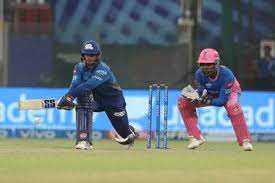
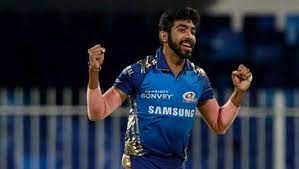
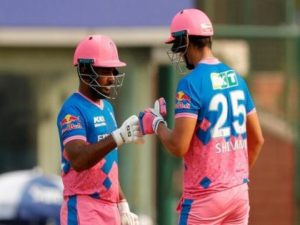
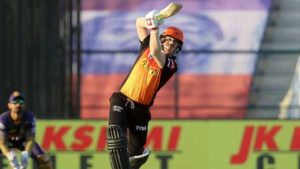
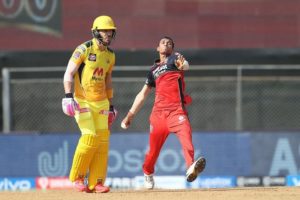
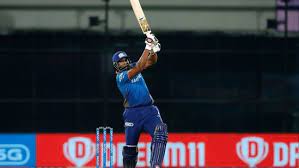
 The most anticipated match in any IPL is the one between Mumbai Indians and Chennai Superkings. CSK has been playing like a dream whereas Mumbai Indians have been struggling with their batting. All fingers pointed to CSK coming out trumps but stranger things happen in cricket and what we viewed yesterday was one. The match swayed from one side to another before a master class from Kieron Pollard saw Mumbai Indians beating CSK off the last ball of the match.
It was the most thrilling encounter of IPL 2021 and Rohit Sharma was right in saying that it was one of the best matches he has been part of.
MS Dhoni summed it up correctly when he said that it was a game that CSK should have won if the bowlers didn’t bowl so many full tosses and if some of the catches were taken. But cricket is not a game of ifs and buts and the only thing that CSK can do is to learn from the mistakes and make the changes going forward.
Let’s look at the hits and misses from yesterday’s match:
 The hits:
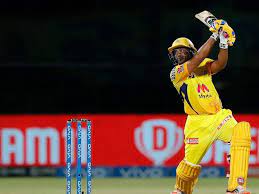
Ambati Rayudu has been struggling thus far in the tournament but to be fair to him he didn’t get many opportunities to play long innings. Yesterday He came in at a very important juncture when CSK was about to lose the grip of the match. At 116/4, Mumbai saw an opening to get back into the match but Rayudu didn’t let it happen and single-handedly took CSK to 218 runs. 72 runs off 27 balls should have been a match-winning one but Pollard usurped that by playing an even better innings. The best part about Ratudu’s innings was that the bowling was not that bad but his quick feet movement made you think the bowling was bad. It was a great innings and probably his best knock in IPL that I have seen.
Sam Curran is a very underrated cricketer. He is a terrific all-rounder in the truest sense but he doesn’t get the sort of limelight that he should. Yesterday when all bowlers were going for plenty his figures of 3/34 looked out of the world. His pinpoint yorkers kept even the rampaging Pollard on check.
The one man who made all the difference yesterday was Kieron Pollard. At 81/3 in 10 overs, it looked like Mumbai Indians would struggle to make the match competitive. But Pollard had other intentions and he started by hitting 3 sixes against Jadeja to warm himself up. From there on there was no looking back and with 8 towering sixes, he scored 87 off 34 balls to help Mumbai Indians win the match off the last ball. Also, let’s not forget his contribution with the ball too because it was he who put the break on the Chennai innings by picking up a couple of wickets.
The misses:
In matches like these, it’s the bowlers who cut a sorry figure, and other than Sam Curran, Deepak Chahar, and Rahul Chahar all had terrible bowling figures. Jasprit Bumrah went for 56 runs. Lungi Ngidi went for 62 runs and Shardul Thakur went for 56 runs. There was no dew and hence it was quite surprising to see the number of full tosses the bowlers bowled. Most of the time they missed the length and full tosses were easily dealt with yesterday.
What to look forward to?
This loss won’t make CSK too unperturbed but MSD would be concerned about the way his pace bowlers have been bowling. I think Ngidi will be dropped next match and he will be replaced by Jason Behrendroff. I don’t think they need any more changes but I do believe they should look at using a leg spinner because that would bring in more balance to the side.
I am still not sure why Ishan Kishan is being dropped. Krunal Pandya can’t play just as a pure batsman and hence I am very surprised at this thought process. Winning makes people forget their shortcomings and I think their batting is still a bit light and they should look at getting an extra batter in. James Nisham turned out to be a failure and I am not sure if he will get another game.
The win makes the tournament very interesting. The gap is reducing between the teams and that’s good for IPL.
Doubleheader today. Let’s see if we get some thrillers once again.
PS. Life is short. Count the blessings. Have a gratitude journal and be happy with whatever you have.
IPL needed some upsets!
IPL 2021 needed some bottom-placed teams to win against the top-ranked teams!
The tournament was dragging a bit and it was high time that we needed some upsets and some close contests. And finally, we got one yesterday when Punjab Kings defeated Royal Challengers Bangalore in Ahmedabad. Punjab Kings have been struggling with balance for most of the tournament and they have been doing too many experimentations with their batting order. For a team to do well one must have a settled side and Punjab Kings have not been one thus far in 2021. Yesterday they were further hampered with the injury to Mayank Agarwal. They made a couple of other changes too with one of those changes, Harpreet Brar making a major impact on the match.
So what were the hits and misses from yesterday’s match?
Let’s have a look.
The Hits:
KL Rahul takes time to get going. It’s a risky strategy if from the other end no one is enforcing the innings. Yesterday Chris Gayle took it upon him to play the aggressive role as Rahul settled in to play the long haul. It worked out well yesterday with Rahul getting into aggressive mode towards the end of the innings. He remained not out on 91 runs off 57 balls to take Punjab Kings to 180 runs which at the end turned out to be a winning total.
The number 7 spot has been a cause of concern for the Punjab Kings throughout the tournament. They tried a lot of players over the last two weeks and yesterday they brought in a relatively unknown domestic player, Harpreet Brar in that spot. With the team stuttering at 118/5 with 5 overs left, Punjab Kings were on the verge of letting go of the good start that Chris Gayle gave them. A couple of lusty hits by Harpreet got the team breathing again and it gave confidence to Rahul too to start playing some shots. The aggressive batting by Harpreet gave him the necessary confidence when he came into bowl. RCB didn’t run away with the chase but wickets were hard to come by. Then in the space of 2 overs, Harpreet changed the complexion of the match completely by picking up the wickets of Virat Kohli, Glenn Maxwell, and AB DeVilliers. RCB couldn’t recover from that jolt and lost the match by a big margin.
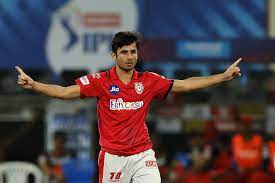
I was very surprised when Ravi Bishnoi was kept on the bench for the first few matches by Punjab Kings. Thank God that good sense prevailed and he got his spot back in the playing XI. He has given impactful performance in all the three matches he played and yesterday was no different. 2/17 in 4 overs is ample proof of the same. What’s more, he came up with another superlative catch in the outfield when he helped dismiss Harshal Patel in the final over.
The misses:
Harshal Patel is leading the wicket-takers list in this year’s IPL and has been amongst the wickets in all the matches thus far. Even in the match against CSK when he went for 37 runs in his final over, he had bowled extremely well in the first three overs. But yesterday he had a terrible day with the ball. Such days happen and I guess it’s good for him that it happened in the middle of the tournament because he can always come back well in the next match. He couldn’t get the ball in the right place and was taken for plenty in the slog overs. The yorkers either converted into full toss or half volleys and both Rahul and Harpreet took a heavy toll on him. Harshal redeemed somewhat with the bat though hitting 31 runs off 13 balls to let everyone know that he has good skills with the bat too. He had the worst economy rate with the ball and the best strike rate with the bat. Talk of polar opposite performance and it was similar to what Pat Cummins displayed against CSK.
Maxwell failed with the bat. That’s two days in a row. This is not yet in the danger zone but his past performance in IPL will keep the RCB fans on tenterhooks. The bigger problem is Virat Kohli. He is opening the batting so that he can play aggressively at the top but that’s not happening and his fragility against spinners is getting very disconcerting too. Time is not far off when teams will start bringing in spinners against him as soon as he comes into bat. For a player of his caliber, it’s quite surprising that he is unable to plug this gap in his play. I sincerely hope that we get to see a century from Virat’s bat before the IPL ends.
What to look forward to?
I think Chris Gayle should open the batting. Even if Mayank comes back it should be he and Gayle who should open for Punjab kings. Rahul should bat at number 4 to hold the innings together. Pooran is in terrible form and I think it would be good for the team to replace him with Dawid Malan. I hope that the win against RCB works like a tonic for Punjab Kings and they rattle off some wins to open up the tournament.
For RCB there is not much to change because they have a settled unit in place. They just need to hope that Harshal Patel is well-spoken to because it’s now twice in three matches wherein he has gone for plenty of runs in the final over. They might think of changing their death ball strategy going forward!
So what do you think? Will this loss make RCB jittery? Will Punjab Kings be able to win some matches on a trot? Please do write in as we look forward to the match between Mumbai Indians and Chennai Superkings later in the evening.
PS. Keeping cool under pressure is what separates a great leader and an average one. Staying positive under any adversity is one of the biggest traits of good leadership!
One of the reasons IPL has become the darling of the cricket world is because of the close contests that you get to see every night. But unfortunately, it has not been the case this season. Delhi Capitals, Chennai Superkings, and Delhi Capitals have created quite a gap between themselves and the other teams. For the cricket-loving public, it’s important now that teams like, KKR, Rajasthan Royals, Punjab Kings, and Sunrisers Hyderabad put up a good show and create some upsets.
Delhi Capitals over the past few seasons have been having a good run against KKR and when they met each other yesterday in Ahmedabad they were the favourites to win the match. First of all, KKR has been laid low by the bad form of their frontline batsmen and their bowlers have been inconsistent too. T20 cricket is fun to watch because you see a lot of 4s and 6s upfront and most of the time the game goes into the last over making it thrilling to watch.
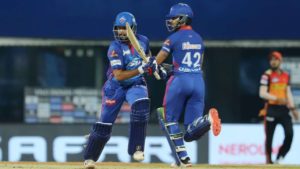
But unfortunately, the matches involving KKR have been the opposite and it’s a struggle to watch them play. They lack intent in the powerplay overs which makes the game drag. Yesterday was no different with KKR struggling once again and the match finished with plenty of overs to spare. 154 runs was definitely a very low score but the way Prithvi Shaw started by hitting 6 fours in the first over, the match became a no-contest thereafter.
So what were the hits and misses from yesterday’s match in Ahmedabad? Let’s have a look.
The Hits:
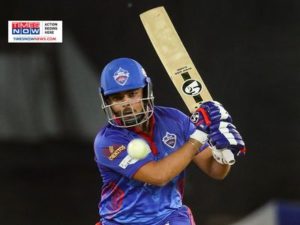
I watched Prithvi Shaw hitting his debut century in Test cricket a couple of years back. His sense of timing and his strokes on the offside left me in awe. Then quite suddenly he lost form and it was a pain watching him bat last year. His natural instinct to go for shots led to his downfall. He is a naturally aggressive player and it was understandable that he might get out sometimes but he started getting out too quickly and too consistently. Eventually, Shubhman Gill replaced him in the Test team but how fortunes have changed over the last couple of months. Prithvi Shaw scored buckets of runs in the domestic tournament which preceded IPL whereas Shubhman Gill struggled with the bat in the England series. Cut to IPL 2021 and we are seeing a rejuvenated Prithvi Shaw on display. Yesterday he started with a bang and made a mockery of the chase by hitting 6 boundaries in the first over against Shivam Mavi. He continued in the same zest throughout the innings and for a while, I felt he might end up getting a century. I guess he would have got his century if he had not got out. Either way, he single-handedly took Delhi capitals to victory yesterday by scoring 82 runs off 41 balls.
I saw Lalit Yadav for the first time in this year’s IPL and I liked him instantly. He is an all-rounder and a terrific fielder. I was a bit disappointed when Delhi dropped him in the last match but was happy to see him back yesterday. He had a telling effect on yesterday’s match when he picked up 2 wickets in the 11th over to push KKR when they were about to get loose. KKR couldn’t recover from that setback and ended up scoring only 154 runs.
That KKR was able to score 154 runs was only possible due to the final push given by Andre Russell. It was Russell’s birthday yesterday and I hoped for a special innings from him. It was not a typical Russell innings but in the end, he did hit some towering sixes to help KKR cross the 150 run mark.
The misses:
The tale of two talented youngsters: Shubhman Gill and Prithvi Shaw. As Shaw’s stocks dropped last year, Gill’s kept rising and now when Shaw is getting his form back, Gill has completely lost confidence. I thought KKR might bring him down the order yesterday but they didn’t. To be fair to him, Gill seemed to get back his touch but the wickets in the middle overs got him tense and he ended up losing his wicket after scoring 47 runs. It would be a good idea to play him at number 4 going forward.
Eoin Morgan has been a disaster for KKR this season. he is one of the best white-ball cricketers in the world but his record in India has never been very good. KKR had a lot of expectations from him after they took him last year but he has not scored many runs for them yet. I am not sure if the team management will persist with him or not but I think they should and I think it would be best suited for him to open the innings. Let’s see if that’s the case in the next match.
What to look forward to?
KKR definitely needs some changes because it’s quite clear that the players upfront are not showing the needed intent. KKR has reached the panic stage because they need to win 6 of the next 7 matches to make it to the playoffs. Stranger things happened in IPL but the chances look very glim.
My ideal playing XI for the next match is given below:
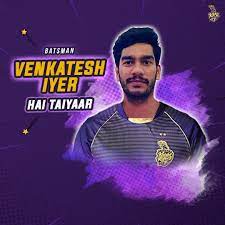
Venkatesh Iyer, Eoin Morgan, Rahul Tripathi, Shubhman Gill, Dinesh Karthick, Andre Russell, Pat Cummins, Lockie Ferguson, Harbhajan Singh, Prasidh Krishna & Varun Chakravarthy
For Delhi Capitals the heart-breaking loss against RCB is now a thing of the past and I think they might not want to tweak the winning combination. Avesh Khan has been a revelation and I think another few performances like this and he might sneak into the Indian team in International T20s.
So what do you think? Will KKR be able to make a comeback? Will Shubhman Gill showcase his special talent this year? Do write in as we await the match between RCB and Punjab Kings later this evening.
PS. It could always be worse!
Mumbai Indians have not played like a champion side this season. Their batters have struggled to score runs and that’s been their major problem throughout this tournament. Rajasthan Royals is one of the weaker teams this season and I expected Mumbai Indians to bolster their batting unit because a loss against Rajasthan Royals would have been disastrous for them. But I was surprised to see that they dropped Ishan Kishan instead and replaced him with Nathan Coulter Nile. It meant that they bolstered their bowling attack and one look at their team sheet made me feel that they are light on batting.
Rajasthan Royals on the other hand doesn’t have many options in front of them so quite expectedly they went with the same playing XI.
A doubleheader on a weekday is not a preferable option for me because I have a day job to take care of and hence I followed the match mostly through online score updates.
So let’s look at the hits and misses from yesterday’s match.
The Hits:
The wickets column doesn’t always give you the perfect picture. Yesterday Jasprit Bumrah took only one wicket but his performance was way above the rest on the field. 4 overs for 15 runs when the opposition scores 171 tells you that his economical spell made a big difference between Rajasthan Royals scoring an average total against a big one. You need to have a bit of luck when it comes to picking up wickets but unfortunately, Bumrah is not having that luck at the moment but he has made sure that he is at his economical best which in turn is helping Mumbai Indias to stifle oppositions.
Rahul Chahar has had some match-winning performances under his belt this season. His match-winning spell against KKR has been a big confidence booster for him and he has been among the wickets ever since. Mumbai Indians have been winning matches due to their bowlers and Rahul Chahar was on the forefront yesterday too. Jos Buttler and Yashasvi Jaiswal made a good start yesterday. In fact, Buttler looked in good touch for a big innings when Chahar stuck and he followed that up by picking up Jaiswal too. This double breakthrough put a break to Rajasthan’s scoring rate and in the end, they couldn’t put up a challenging total.
Before the match I expected Mumbai Indians to drop Quinton De Kock because he had hardly scored any runs this season. But they stuck with him and yesterday QDK gave the returns. He not only batted right through, but he scored a quick rate too. Mumbai thus far has been very dependent on Rohit and Surya Kumar Yadav and when these two wickets fell there was a chance of a meltdown but QDK made sure that he kept his end up. He got able support from Krunal Pandya and in the end, Mumbai Indians won the match quite easily with 9 balls to spare.
The Misses:
Shivam Dube is getting an extended run this season because Rajasthan Royals is short on the bench. He is yet to play any special knock and his domestic form is yet to be replicated in IPL. He must consider himself extremely lucky that Rajasthan Royals is persisting him at number 4 because he is yet to play a forceful innings. Yesterday after a good start what Rajasthan Royals needed was an enforcing innings from Dube. But that didn’t happen and he wasted too many deliveries which meant that their finisher Miller didn’t get many deliveries to play. I think if Dube has to play then he should come down the order because Rajasthan is losing momentum in the middle overs because of him.
Jos Buttler looked in good touch yesterday but due to the void that’s created due to injuries in the team, he needs to play long innings. Good-looking 30s and 40s won’t help Rajasthan Royals to win matches. Yesterday he was looking good to play a big one but then got out trying to be over-ambitious. I hope he plays some big knocks in the upcoming matches because when Jos Buttler plays well, it makes for great viewing.
Playing Nathan Coulter-Nile and Jayant Yadav together was a very surprising move from Mumbai Indians. Both of them didn’t give any eye-catching performance and though Mumbai Indians won the match easily I do not think it is the right combination for them going forward.
Mustafizur Rahman is the leader of the bowling attack in the Rajasthan Royals team. It is hence very important that he performs to his potential on all the match days. Rajasthan Royals would need him and Chris Morris to perform consistently with the ball otherwise they would find it very difficult to win matches against the top-ranking teams. For IPL to be competitive, teams like Rajasthan Royals must win a few matches. A one-sided tournament is not great for viewers and right now there is a big chance that we might have the most one-sided IPL ever.
For the sake of the viewers, teams like Rajasthan Royals must win against the top 4 ranked team in the upcoming future.
What to look forward to?
For Rajasthan Royals, it’s looking extremely difficult to make an impact in the tournament. For them to turn this around they need to have their best batters play some significant knocks. Holding back Miller is not a very smart decision and they should play him at number 4. They will also hope that their three main batters, Jos Buttler, Sanju Samson, and David Miller play significant knocks going forward.
For Mumbai Indians, I feel they got their combination wrong yesterday even though they won the match. Dropping Ishan Kishan didn’t feel good and I hope they reverse the decision in the next match. I would suggest having him back in the playing XI in place of Jayant Yadav. They have a good bowling attack and they are in good form so once their middle-order gets runs under their belt, we might as well see Mumbai Indians lifting the trophy once again.
So what do you think? Should Ishan Kishan get back his spot in the playing XI?
Do write in as another match awaits us today evening. This time it’s Punjab Kings Vs Royal Challengers Bangalore.
PS. We do not rise to the level of our expectations. We fall to the level of our training.
Towards the fag end of IPL 2020, Chennai Superkings got their act together winning the last 3 matches. It was too late in the tournament but they derailed the party for KKR and Punjab Kings. One significant factor that played out in those 3 matches was the form of Ruturaj Gaikwad and Faf Du Plessis. When the tournament started this year, I was looking forward to seeing how Ruturaj performs this year. There were expectations and I guess that put him under a bit of pressure initially with 3 continuous failures. It was great to see though, that CSK kept backing him and now the results are coming consistently.
Another day, another match, change of venue but the run machine of both Faf Du Plessis and Ruturaj Gaikwad continued unabated. When Kane Williamson hit those lusty blows in the end taking Sunrisers to 171, I felt we will have another close match. But, how wrong was I as CSK bossed the chase and at one point looked like finishing the match with all wickets in hand. Rashid Khan picked up a few wickets at the end to create a flutter but finally, CSK won the match easily to reach the top of the table.
So what were the hits and misses from yesterday’s encounter in Delhi?
The Hits:
Faf Du Plessis was the consistent performer for CSK in UAE last year. Though CSK didn’t have a good time, Faf didn’t let them down. It has been no different this year too and other than the first match he has scored consistently. With three fifties already in his kitty, he is leading the race for the orange cap. CSK will hope that he continues with this good form because with him in good touch the work gets that much easier for the team down the order. In Ruturaj he has got an able partner. It was their second 100 run partnership yesterday and the signs are ominous for the other teams. Yesterday it was Ruturaj who was more aggressive of the two and when that happens the work for Faf gets that much easier. Faf Du Plessis can play long innings and if he can stay till the end, CSK will chase down any totals.
Dropping Manish Pandey didn’t work for Sunrisers Hyderabad and he was back in the playing XI yesterday. With Kane in the playing XI, it would make sense to play Manish in number 4 then his current slot of number 3. Yesterday it was Kane who gave the final touch to the Sunrisers’ innings and without him, they would have struggled to reach 160. Manish showed that he is in form it’s up to the team management how they use him properly. Manish is an experienced cricketer and if Sunrisers Hyderabad has to progress further in IPL 2021, he needs to play a stellar role in it.
The Misses:
Shardul Thakur made a name for himself by being a wicket-taker. He goes for runs most of the time but he takes a bag full of wickets too. This IPL season has been the opposite. He is going for runs and he not able to pick up wickets too. He was the weakest clog in CSK’s wheel yesterday and he got a pasting from Kane Williamson in the end. Right now CSK is winning so he might not come under scrutiny but I am very concerned with the form of 2 of our Brisbane heroes, Washington Sundar and Shardul Thakur because they are supposed to play important roles in the upcoming T20 World Cup. I hope Shardul Thakur gets his act together soon. He is a very competitive cricketer and he knows how to come back from tough situations. Here’s hoping for a grand comeback for Thakur Saab.
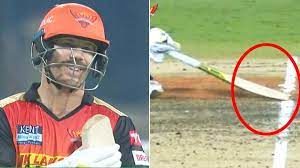
David Warner scored another 50 in IPL cricket. No one has scored more half-centuries than David Warner in IPL history. So scoring a 50 is like a habit for this Australian opener and Sunrisers’ captain. But the way he scored those runs yesterday made a lot of difference. He was unable to time the ball and hardly got any power behind his strokes. 57 runs off 55 balls is not something anyone expects from Warner and he admitted that candidly after the match. If SRH needs to turn around this campaign, Warner needs to play freely at the top.
With Natarajan and Bhuvaneshwar Kumar sitting out due to injuries, there is too much pressure on Rashid Khan. Cricket is a team sport and one bowler can’t win you matches. He did pick up 3 wickets but the other bowlers struggled to make an impact. Sunrisers Hyderabad needs to look at their balance. After all, right now they are suffering because they are unable to blend young with the old properly.
What to look forward to?
CSK looks like a well-oiled machine and I do not foresee any changes going forward. MS Dhoni never liked chopping and changing much and I will not be surprised if this same XI continues playing right through. With Ngidi they have a good pace bowler too. They have great balance in the side with Shardul Thakur coming in at number 9 and 7 bowling options.
For Sunrisers Hyderabad they have reached a stage from where they need to win a few matches consistently. For that to happen they need to make some changes in their lineup. Here is a suggestion which they can look into going forward.
Suggested Playing XI: David Warner, Priyam Garg, Kane Williamson, Manish Pandey, Kedar Jhadav, Vijay Shankar, Abhishek Sharma, Jason Holder, Rashid Khan, Sandeep Sharma, Khaleel Ahmed
This lineup ensures more balance and gets some experience in the bowling lineup. I am suggesting Kedar Jhadav keep wickets. I am not sure what’s the injury status of Bhubaneshwar Kumar and I think his availability is crucial for Sunrisers Hyderabad. A competitive Sunrisers Hyderabad will be great for IPL in the next few weeks.
What do you think – will Sunrisers Hyderabad be able to turn this around?
Do write in as we get into a doubleheader today with Mumbai Indians meeting Rajasthan Royals at the Kotla in the afternoon and then later in the evening its KKR vs Delhi Capitals in Ahmedabad.
PS. Count the “Thank You” more than the “Rupees” in your bank account.
After the toss, one of the commentators declared that the first round goes to Rishabh Pant. Toss seemed to be a deciding factor after the previous match in Ahmedabad which was heavily affected due to the dew. In fact, the ground was feeling like an astroturf pitch day before yesterday. But we can’t control nature, can we? As luck would have it, there was no dew yesterday and in fact, there was a sandstorm before the chase started and I guess it worked in RCB’s favour.
When a team starts winning close encounters, you can very well guess that luck is on their side, and to be frank you do need a bit of luck to win tournaments like IPL.
Delhi Capitals were coming off a super over win against Sunrisers Hyderabad whereas RCB were smarting from the loss against CSK – was it CSK or was it Jadeja? RCB on their part took it like a freaking show by Jadeja and hence didn’t put too much pressure on themselves. When you are in a roll, your body language changes and that’s reflecting on Virat Kohli too because after a long time RCB is looking like the team to beat.
But Delhi Capitals are no pushovers and it was a game that I looked forward to because one thing was sure and that was we would see a great match of cricket. And that’s exactly how it panned out as RCB beat Delhi Capitals by 1 run. The thrillers are back in IPL and with all the doom and gloom outside, it’s not bad that our minds are kept diverted for a few hours. So what were the hits and misses from yesterday’s match? Let’s have a look.
The hits:
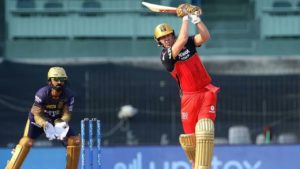
I find it so difficult to believe that AB DeVilliers doesn’t play any form of cricket other than IPL. You can practice for hours but there is no better practice than match practice. With so less match time under his belt, I wonder how he keeps belting out unbelievable batting performances match after match. I don’t think I have ever seen an out-of-form AB. If there is one international cricketer whom I love and respect after Sangakkara and Gilchrist then it’s AB DeVilliers. Yesterday close to 60 runs were scored by RCB in the last 5 overs and AB contributed 50 of them. He was the difference between an average score and an above-average score and finally, the winning margin was only 1 run so you can imagine those last over hitting made all the difference for RCB.
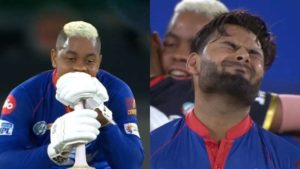
Shimron Hetmeyer is one of the most talented cricketers from the West Indies. But he has a big problem when it comes to consistency. The day he is in form, you just love seeing him bat but he hardly follows that with a few more and generally falters in the next match. I don’t know what’s going to happen in the upcoming matches but yesterday Delhi Capitals were down and out when he changed the complexion of the match single-handedly. It sounds difficult to believe that he outscored Rishabh Pant but the fact is Pant was struggling against the same bowlers, in the same pitch where Hetmeyer was going hammer and tongs! He brought the equation down to 14 runs off the last over – an over where he didn’t get much of the strike and Delhi Capitals finally lost by one run. Both Hetmeyer and Pant got half-centuries though Hetmeyer got it in 23 balls to bring Delhi Capitals back to the match. The disappointment was writ large on the faces of Pant and Hetmeyer after the last ball was bowled and quite understandably so because it was a case of so near yet so far. I am sure we will see some more fireworks from these talented youngsters in the days to come.
This year we are seeing some fantastic bowling performances by uncapped Indian pace bowlers. Avesh Khan is one of them. He has been consistent right from the first match and he continued doing so yesterday too. He has upped his pace and his line has been immaculate. He is getting some prize scalps too. Recently he got the wicket of MS Dhoni and yesterday he got the better of Virat Kohli.
The misses
Kagiso Rabada was the highest wicket-taker last season but he is a pale shadow of that Rabada from UAE. He is missing the length consistently and is going for runs. Yesterday he was not asked to bowl in the death but he still went for plenty. It won’t be a bad idea for Delhi Capitals to rest him and play Nortje or Woakes in a few upcoming matches.
Virat Kohli must be thinking about what’s going on. A couple of years back he used to come to the crease only to score centuries and today it’s so different with him struggling to score half-centuries. The funny part is that he is not struggling on the crease. Till the time he is batting he is looking in form and then he plays a false shot and gets out. It’s something in the mind and India and RCB must be hoping that we all get to see the old run machine back amongst us! Will it happen before the IPL gets over? Let’s wait and watch.
Steve Smith is clearly struggling to adapt to Indian conditions and more so with T20 cricket. Gone are the days when he used to make up the slow start with big finishes. Delhi Capitals need a player at number 3 who can play till the end and that’s not happening. I think it would make sense to replace him with a local player like Vishnu Vinod or Lalit Yadav going forward. The absence of Shreyas Iyer is hurting them a lot and it’s important they get their team combination right otherwise it can be troublesome for them towards the end of the tournament.
What to look forward to?
Washington Sundar seems to be struggling this year and it won’t be a bad idea to rest him for a while and get Shahbaz Ahmed to play instead. Rajat Patidar looked good and so Finn Allen has to wait for his debut. I think Siraj is still a work in progress when it comes to death overs bowling and hence I would like to see Daniel Sam’s bowling at the death. Siraj is superb with the new ball and it won’t be a bad idea to bowl him 3 overs initially with the final over around the 15th or 16th over. They don’t need much tinkering with the team because their core team is playing well and once Virat Kohli starts scoring this team will become unbeatable.
For Delhi Capitals they need a few changes in their batting and bowling personnel. I would love to see Lalit Yadav back in place of Steve Smith and it would be good to get Chris Woakes back in place of Amit Mishra. Rabada should be rested and Nortje should be a given a chance. Will they make so many changes after a couple of misfirings? It would be interesting to see.
All in all both Delhi Capitals and Royal Challengers Bangalore are all set to go to the playoffs. Only a miracle from some other teams can change this script. And if that happens we are in for some great cricket in the next couple of weeks.
What do you think should be the playing XI for Delhi Capitals? Do write in as we move to Delhi tonight where Chennai Superkings take on Sunrisers Hyderabad.
PS. Adversity brings the best out of us. In this doom and gloom that’s surrounding us, it’s heartening to see how citizens from all walks of life coming together and helping each other in whatever way they can. Yes, we shouldn’t have reached this stage. Yes, the system failed us. Yes, the people who are supposed to protect us are giving excuses but finally, it’s our life and we should be careful and we should take care of our well-being. If you can help please help but most importantly don’t let your guard down. This pandemic is not going away in a hurry. So take care and be safe.
Talent is overrated! Skills get underrated!
Confused? Let me explain.
I have seen people saying, “That person is very talented” but I hardly see people saying, “That person is very skillful”!
All of us are born with some talent. But to succeed you need to practice and improve your skills. Your talent gets converted to skills only through practice.
As a child when we are told, “good boy”, our brain gets a false signal that we are great and then we stop thinking and stop doing things that can actually help us become great. So, never allow such false signals to enter your brain.
All of us are talented but not all are skillful. As I said above, only with practice you can hone your skills which then does justice to your talent.
For example, you may write well but if you do not write and publish content regularly then it’s a wasted talent. I have seen many middle-aged people being regretful that they didn’t follow their passion at the right time. So do not allow that to happen to you. Always do what you love to do. And if you start that at an early age your chance of success improves.
I have seen many talented individuals not reaching their true potential. Most of the time the blame would be on the individual though most do not accept that fact.
Winners never give excuses. Losers do.
Have you ever seen a successful person blaming their luck if they fail in any activity? No, because they learn from their failures, and learning from failures will only start when you stop giving excuses for your failures. You need to accept that you failed and then you need to look into the reasons and thereafter you will find a way to overcome that failure.
Let’s take the example of Vinod Kambli. Both Vinod Kambli and Sachin Tendulkar came to be known to the cricketing world together after their world record partnership of 664 runs in school cricket. From there Sachin got selected to the Indian team within 3 years whereas Kambli got selected after 7 years. By the time Kambli got into the Indian team, Sachin was already an established batsman but that didn’t stop him from trying to improve his game. Kambli in the meanwhile scored back-to-back double centuries in his 3rd and 4th Test match and immediately got into a self-gratification mode. What happened thereafter was that Kambli lost his place in the Indian team in 1997 whereas Sachin carried on and finally retired in 2013.
Talent-wise both Sachin and Kambli were no less than each other at the age of 14 years but one kept on practicing and improving whereas the other got self-gratified and didn’t practice enough to plug the loopholes in his batting and finished with an unfulfilled career.
Now let’s think of Anil Kumble. He was in his first series in England in 1990 when he dropped a catch and didn’t do great with the ball too. Kapil Dev told him that he will be surprised if he will have a long career with India. How wrong was he? Because Anil Kumble kept working hard and he not only went on to beat Kapil’s record in picking up maximum test wickets for India – he keeps holding that record even after 13 years of his retirement.
Talent can get you to a certain level but to be successful it’s the skills that take you far. And one needs to consistently work on his or her skills because if you don’t, someone else will come in from behind and push you back. So how do we do that?
- Honing your skills.
First, ask this question yourself. What are you good at? You only can answer this question. If you are good at writing then you need to write daily and you need to read daily. You need to read because you will learn more perspectives and it will help you become a better writer.
Be a creator as well as a consumer.
2. Consistent.
You need to practice your skill daily. Each day you need to write. Do not think or rather overthink if it’s good or bad. Write for yourself. Writing will de-clutter your mind. Initially other than a couple of people others won’t even read your content. Doesn’t matter. Keep going. Keep writing every day. Write a blog. Then take that blog and convert it into multiple tweets or LinkedIn posts. Write LinkedIn articles. Just keep writing.
3. DOTS
Do One Thing Surely. For me it’s writing so I make sure that I give 2-3 hours every day on writing. Do this daily for more than 3 years and you will see results coming in. Do not get a false hope if you get a lot of traction in 6 months because the keyword is consistent. Even on your worse days, you should show up. This is your passion so you don’t need external motivation.
4. Power of 1%
Keep improving by 1% daily. You are your own competitor and hence you need to be a better version of yourself than you were yesterday. It’s far better to compete with yourself than competing or comparing yourself to others. Think of Sergei Bubka – the man broke his own record 34 times. The rest of the field used to compete for the silver medal whereas Bubka was busy breaking his own records. This is only possible if you remain humble, stay grounded and believe in the power of 1%.
Do not get into a false hope or do not send signals to your brain that because you are talented your life will be set. Nothing is set because we are all talented. But talent doesn’t get food to the table – Skills do. And hence you need to keep developing your skills.
Only when you turn your talent into your skill then you will find fulfillment in your life.
What you are good at and what you love to do is your purpose and passion in life – That’s your talent.
Now convert this talent into meaningful skills by consistently working on it to make yourself skillful and once you have reached there, don’t get too satisfied, rather be happy with what you have achieved but at the same time keep working on it so that you keep getting better every day.
As I said above, what you love to do is your “Purpose“
And what you are good at is your “Passion“.
These 2 Ps are your “Talent“.
Now, after this what you get paid for is your “Profession“. That’s the 3rd “P” of your life. And you get paid only when you convert your talent into skills.
Think of a cricketer:
He “loves” playing cricket (his purpose in life).
He is “good at” playing cricket (his passion).
He “gets paid for” playing cricket (his profession).
When all these 3Ps come together, you will find a person having a fulfilling life.
I believe all of us, have it in us, to find these 3 Ps in life. You just need to travel back in time (in your mind) a few years and ask yourself, “What used to make you happy”. Now, try and do those activities once again – the things which used to make you happy – but you have stopped doing – and you will find that you will have fewer regrets going forward.
Success is not measured by the amount of bank balance you have – it is measured by what you give back to society and how much happy you are with your life. You will be truly happy only when all the 3 Ps are in sync.
So what are you waiting for? Have you found the 3 Ps or do you need help in finding your 3 Ps? Do write in if you think I can be of any help.
Kolkata Knight Riders after losing 4 matches in a row needed a change of fortunes when they met Punjab Kings yesterday in Ahmedabad. A change of venue was a good omen for them and it started well with Eoin Morgan winning the toss. For Punjab Kings, it has been a topsy turvy season with 2 wins and 3 losses thus far. Looking at KKR’s performance they must have been silently confident in winning their third match of the season.
But as IPL has shown us over the years things hardly go according to script and that’s exactly what happened yesterday with KKR coming out trumps and in the process improved their Net Run Rate too.
Let’s look at the hits and misses from yesterday’s match.
The Hits:
Prasidh Krishna has had a very underwhelming IPL 2021 thus far. He was going for a lot of runs and mostly due to the length that he had been bowling. Yesterday he was quite conscious of that and kept the ball just short of length not allowing the batsmen to free their arms. This not only helped him to keep the boundaries at bay but it also helped him to pick up 3 wickets. It was his best performance this year and I hope he remains consistent for the rest of the season.
Shivam Mavi has yet to fire for KKR. His economy rate is high and he doesn’t take wickets too. KKR has invested a lot of time in the three young bowlers, Prasidh, Mavi, and Nagarkoti and it was time for them to return the favour. Mavi bowled well in the last match and he continued in the same fashion yesterday too. The biggest plus has been that he is not going for runs which means he is controlling his length and line to perfection. You need a bit of luck when it comes to wickets but that will come if you remain consistent. Yesterday he went for just 19 runs in 4 overs and took the wicket of Chris Gayle too. He bowled three overs in the power play so I must admit that it was a great bowling performance. I hope like Prasidh Krishna it works as a confidence booster for him and I look forward to him taking a few wickets in the upcoming matches.
At 17/3, KKR’s chase looked doomed. Yes, the target was only 124 runs but the KKR middle order had hardly scored any runs in the earlier matches. One man who has been somewhat consistent is Rahul Tripathi. He along with Eoin Morgan set out building a match-winning partnership yesterday. It was heartening to see Morgan back in form. He struggled with his timing but as the innings progressed he seemed to be getting his confidence back. An in-form Morgan can make a huge difference to KKR and the team can hope that it’s the start of some big scores in the future. Some dodgy running kept the viewers’ pulse racing but the useful 40s by both these batsmen took KKR home yesterday.
I was highly surprised when I kept seeing Ravi Bishnoi on the bench in the first 4 matches. He is an extremely talented bowler and I believe he has the best Googly among all contemporary Indian leg spinners. Punjab Kings got him in the playing XI in their last match and he had an impact straight away. Yesterday with heavy dew in the ground I thought he might struggle but how wrong was I. He gave away just 19 runs in his 4 overs. Though he didn’t pick up any wickets he could have easily had a couple because on many occasions the batsmen were unable to read his googlies properly. His moment of the match came in the field though when he pulled off an absolutely stunning catch to dismiss Sunil Naraine.
The Misses :
Shubhman Gill and Nitish Rana found another innovative way to get out yesterday thereby extending their bad form. Rana guided a slow full toss to the short extra cover fielder while Gill missed a straight delivery playing across the line. It has been a very disappointing performance from Gill in this tournament and I find it hard to understand the reason. Cricket is played a lot in the mind and I think this extended run of low scores is now playing in his mind. He is playing well in the nets as per David Hussey so I guess he is just one innings away from getting his form back. KKR must be hoping that he gets there quickly.
KL Rahul is not playing to his strengths and I guess it’s better for him to come at number 4 going forward. He struggled as an opener in the T20 series against England and it’s been an extension of sorts in IPL. He got back to run making form against England when he was pushed down the order. It won’t be a bad idea to try that in IPL too. In Chris Gayle, they have a ready-made opener so it won’t harm the team at all if he plays at number 4. His struggle at the top is harming the team because the momentum needs to be built in the power play which Punjab Kings is unable to do.
Nicholas Pooran is having a very bad tournament thus far. With the intensity lacking in the power plays it’s becoming troublesome for Punjab Kings in the middle overs with Pooran completely out of form. Yesterday he had the opportunity to build a long innings but he failed again. I think it won’t be a bad idea to replace him with Dawid Malan from the next match.
Pat Cummins had made a habit of taking wickets in the power play when the tournament was held in UAE last year. This season it has been completely different and he has been struggling with his length and line. Yesterday he did pick the wicket of KL Rahul in the power play but his line and length was not consistent enough. Punjab Kings scored 123 runs and Cummins gave away 31 of them. That’s a pretty ordinary economy rate considering the Punjab batsmen were struggling against all the bowlers. KKR needs Cummins to pick up wickets and till the time that happens they will keep struggling.
What to look forward to?
I think Punjab Kings need to make some changes in their batting order. Just trying to improve balance and picking Moises Henriques doesn’t make sense and it’s not working for them too. Here is my preferred playing XI for the next match.
Chris Gayle, Mayank Agarwal, Dawid Malan, KL Rahul, Shahrukh Khan, Deepak Hooda, Chris Jordan, Jhye Richardson, MD. Shami, Ravi Bishnoi, Arshdeep Singh.
For KKR the win gets them back to the middle of the table but problems remain at the top of the order. They have too many players who are slow movers in the field and I think they need a change in the top order. I think they should replace Nitish Rana with Venkatesh Iyer. Also, it makes sense to open with Naraine and push Gill to number 3.
What do you think? Will the number 3 position suit Gill better or should he continue opening for KKR?
Do write in as we await the blockbuster match of the season when RCB meets Delhi Capitals later in the evening!
PS. Donation is a private matter. It’s said that when you donate from the right pocket – the left pocket should not know. So if you are donating for a cause you need not let the world know. But, if you can please donate with whatever you can. The country needs you and this is the time to show that you care.
Just the other day, I was telling my son that the IPL of 2021 is having too many one-sided encounters. Yes, he has been treated to some great batting and bowling performances but for the neutral viewers with most matches not going into the final over, it was kind of boring.
IPL over the years has been synonymous with close encounters with most matches getting decided in the final over. A couple of matches this season have been thrillers but most have been too one-sided. The last few days we saw one after another match turning out to be real duds. It was not supposed to be that way because all the 8 teams are equally matched but with many players not being in good form, some teams have hardly been competitive.
Finally, we got our first “tie” of the season yesterday when Delhi Capitals played Sunrisers Hyderabad in Chennai. It didn’t look so going into the last 2 overs but some lusty blows by Sujith at the end gave us our first Super Over of the season. One super over might not have been enough because Delhi Capitals just made it in the last delivery and we got to remember that Sunrisers lost a run because David Warner ran a centimetre short in the super over.
So what were the hits and misses from yesterday’s match? Let’s have a look.
The hits:
Kane Williamson brings in a lot of stability in the Sunrisers’ middle order. The team has an inexperienced middle order and his presence makes a world of difference to this team. Yesterday it was Williamson who held the team together after the early loss of David Warner. With him, in the crease, the other batsmen could play more freely. It’s a different matter that their batsmen faltered once again and an easy chase got botched up in the middle overs by losing too many wickets. That the match went up to the super over in the end was only possible because Kane Williamson was there till the very end.
We are seeing a different avatar of Prithvi Shaw this season. I love watching him bat because he plays some breathtaking shots while he is in the crease. I have hardly ever seen him getting bogged down and it’s been lovely watching him bat this season. The first three balls of the match were dispatched to the boundary yesterday and it was a run out at the end which saw him getting dismissed after scoring a half-century.
It was great to see Axar Patel back in the team. He had a great season in the test matches and his straighter deliveries got him a lot of wickets in both Chennai and Ahmedabad earlier this year. The straighter deliveries were once again difficult to pick and he finished with 2/26 in his quota of 4 overs.
Avesh Khan has been a revelation this season. He has picked up the pace but most importantly he is maintaining a good line and length. He has bowled in the power plays and he has bowled at the death too but on all occasions, he has come out trumps. The best thing is that he is picking up wickets too. Yesterday he picked up three and he is now one of the top wicket-takers this season. IPL 2021 has been good for the Indian players thus far with Indian uncapped bowlers leading the purple cap race.
When the super over started, I was surprised to see David Warner coming out to bat with Kane Williamson. If there was one man who looked in great touch, it was Johny Bairstow and hence I was astonished to see that he didn’t come out to bat. He had scored 38 runs off just 18 balls and it defied logic why he was not preferred instead of David Warner. That one wrong decision probably cost Sunrisers the match.
The Misses:
Vijay Shankar and Kedar Jhadav are supposed to hold the middle order together for Sunrisers Hyderabad. Priyam Garg and Abdul Samad are warming the benches only because they lack experience but the experience didn’t help yesterday because both Shankar and Jhadav failed miserably and Sunrisers were put under further stress with them not been able to score boundaries.
With Bhuvaneshwar Kumar and Natarajan not available due to injuries, it was important for Khaleel Ahmed to play a leading role. Unfortunately, he couldn’t replicate the form that he showed in the previous match which meant that Delhi Capitals were never under pressure other than when Rashid Khan bowled. With Siddarth Kaul also struggling, Sunrisers were unable to get breakthroughs in the middle or death overs. The fielding and especially the catching was a lot to be desired too.
Sunrisers’ decision to play Sujith turned out to be a good one because he bowled economically and with the bat his 14 off 6 balls helped Sunrisers tie the match.
What to look forward to?
Delhi Capitals have been playing very consistently throughout the season but they have some weaknesses which have not been exposed yet by other teams and one of them is their not-so-strong middle order. With Ashwin leaving the IPL midway, it would be interesting to see who replaces him going forward. I would suggest Lalit Yadav come back in place of Ashwin because it strengthens their batting order too. Rabada’s form is a cause for concern and I would live to see Woakes or Nortje coming back into the playing XI.
For Sunrisers Hyderabad it’s back to square one and going by the current form, it’s looking highly difficult for them to get into the top 4. Like Rajasthan Royals and Kolkata Knight Riders the inexperienced players are not playing to their potential and this, in turn, is putting more pressure on the senior players. If the senior international players don’t play as per their potential I do not think any of these 3 teams will progress to the playoffs.
This situation is not good for IPL because it effectively makes it a 5 team tournament. I hope I am proved wrong in the future matches and these bottom-rung teams come up with some stellar performances.
So what do you think – will Sunrisers be able to make a comeback in the tournament? What changes would you suggest?
Please write in as we move to Ahmedabad today where KKR takes on Punjab Kings in the evening.
PS. You are on your own journey so don’t compare with others instead make your life worth remembering.
In a long and grueling tournament like the IPL, momentum matters a lot. Both RCB and CSK were on a roll with one winning 4 matches In a row and the other winning 3. When both these teams met each other at the Wankhede yesterday one of them had to lose but what was important was the manner of the loss. A close encounter doesn’t matter that much when you are on a winning momentum but a big defeat can change the entire perspective! On paper, RCB looked a much better team but they tinkered with their lineup comprising their batting! It was not a very good idea but the false promise that their top order is in good form led to such a decision. Sometimes such decisions can hurt you and unfortunately for RCB that’s how it turned out to be. But to be fair to them it was a one-man show yesterday. Ravindra Jadeja could do no wrong yesterday and the once-in-a-generation cricketer demolished RCB single-handedly.
His performance yesterday was such that you don’t have much to write about the players! So what were the hits and misses from yesterday’s match?
Let’s have a look.
The Hits:
At 154/4 at the end of the 19th over with Jadeja on 26 runs off 21 balls it looked like an average score at the Wankhede. Harshal Patel had the ball who till that time had figures of 3/14 in his 3 overs. In a space of 6 balls (7 due to the No Ball) the momentum shifted completely with Jadeja hitting 37 runs including 5 sixes to power CSK to 191 runs. An average score became a winning score and the great bowling figures of Harshal Patel lay in tatters. RCB had earmarked Harshal as death over specialist and till yesterday he had been a revelation. But yesterday he missed the length and Jadeja got the balls on his zone, was able to free his arms, and connected marvellously to hit those towering sixes.
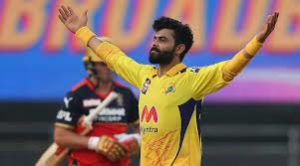
That one over turned the match on its head but Jadeja was not done for the day. There is a reason why he is considered one of the world’s top all-rounders and he was almost unplayable with the ball in hand. Maxwell and AB DeVilliers were left flummoxed by the turn and bounce and he ended with figures of 3/13 in 4 overs. In the post-match press conference, Virat Kohli couldn’t suppress his excitement on this magical performance because he knows how vital Jadeja is for Team India if he has to hold the T20 World Cup in his hands.
If there is an example of a three-dimensional cricketer then you don’t need to look beyond Jadeja. He was terrific in the field too, affecting a direct hit to see the back of Daniel Christian. What a day for Daniel Christian because it was he who dropped Jadeja when he was on zero. In hindsight that drop cost RCB the match.
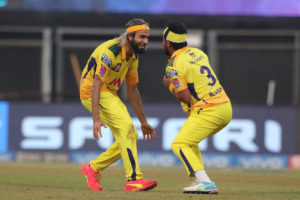
Moeen Ali was injured yesterday and hence CSK had to do some adjustments to their lineup. They brought in Dwayne Bravo in place of Moeen Ali and got Imran Tahir replacing Ngidi. Ngidi had a good match against KKR picking up 3 wickets but yesterday being a day match, CSK smartly got an extra spinner to make use of the dry conditions. I thought that Tahir should be a permanent fixture in the CSK playing XI because he is a wicket-taking option for them. Though he only took the wickets of the tailenders yesterday he kept his end tight even in his first spell. 2/16 in 4 overs should see him getting a few more matches. The Jadeja effect brushed on to him too as he ran out Kyle Jamieson with a direct hit.
Faf Du Plessis was Mr. Consistent for CSK last season. The team was losing matches but Faf kept scoring runs. The habit of scoring runs has continued unabated this year too and looking at him bat I sometimes wonder why did he retire from international cricket. I believe both he and AB still has a couple of years of international cricket left in them and I hope to see them in the T20 World Cup later this year. Another day and another half-century for Faf Du Plessis.
The Misses
Navdeep Saini has lost his place in the team with the rise of MD. Siraj. With Harshal Patel getting wickets consistently it’s getting even more difficult for him to get into the XI. Yesterday RCB replaced Shahbaz Ahmed with Navdeep Saini but it backfired. Saini had no control over his line and length and it was he who allowed the CSK batsmen to keep up with the run rate when the others squeezed from the other end. It was a very disappointing performance from him and could see him back to the benches in the next match.
RCB is having a problem with its spinners. Yuzvendra Chahal is nowhere close to where he was a couple of years back. From being the go-to man for Virat Kohli he now doesn’t even complete his quota of 4 overs. Washington Sundar seems to be struggling too and his struggle is in the mind because his fielding and batting both have been a letdown this season. It won’t be a bad idea to rest him for a few matches. Probably fatigue has set in after a long international season. These bio-bubbles are not helping too. From the outside, we might think that these cricketers are very secured inside these bio-bubbles but the fact is it can cause tremendous damage to mental sanity. And young players can suffer from mental fatigue. I am not sure what’s the case with Sundar but he seems to be struggling.
Virat Kohli has not been in big run-scoring form for more than a year now. A man known for scoring centuries and for being consistent has lost that magical touch. In the last match when after getting in he started playing those lovely off drives, I felt our captain is back but he was once again out for a low score yesterday. It was Devdutt Padikkal who kept the scoreboard moving as Virat struggled. I hope we get the old Virat back before IPL ends this season.
What to look forward to?
RCB lost their first match of the season. It must not bother them much because it was a one-man demolition show but they need to make sure that they get their combination right and don’t allow the loss to play too much on their minds. It’s not a bad idea to play Finn Allen in place of Daniel Christian who has been struggling. They have many bowling options so this change won’t hurt them much.
For CSK they are looking like the old champion team which was a synonym to IPL. They have wonderful balance in the team and most of their players seem to be in decent form. CSK will be in the playoffs surely. When the tournament started I didn’t think it would happen and now if it doesn’t happen then I will be surprised!
Will this loss hurt RCB too much? Will it affect them mentally? Or will they treat it as an aberration and move on? Let’s wait and watch as the scene moves to Ahmedabad from today where Punjab Kings take on the struggling Knight Riders!
PS. Positivity attracts positivity! So keep spreading love and happiness! Together we will beat this pandemic. Keep wearing the mask at all times and get vaccinated as soon as possible.
Subscribe
Get top posts delivered to your inbox